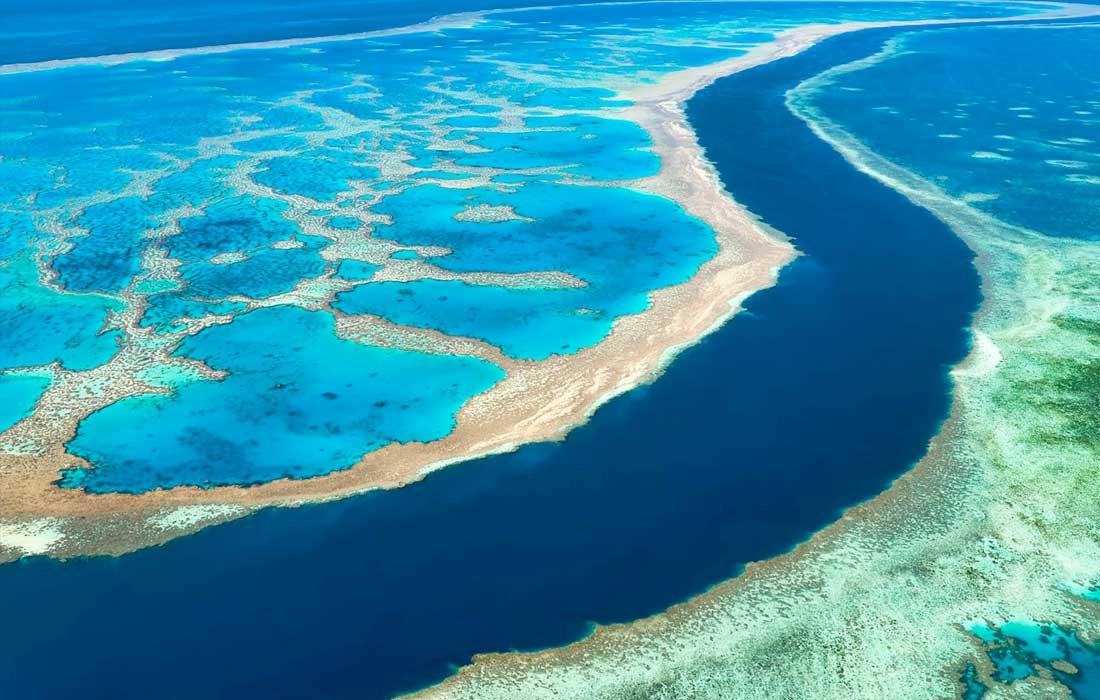

QUEENSLAND: Australia’s Great Barrier Reef has endured its most severe coral cover loss in recorded history, following one of the largest mass bleaching events ever seen, according to a new report by the Australian Institute of Marine Sciences (AIMS).
Released on Wednesday, the report highlights an alarming annual decline in coral cover across the reef’s northern and southern regions – a drop ranging from 25% to 33%. This marks the most significant decline observed since AIMS began its long-term monitoring programme nearly four decades ago.
“We are now seeing increased volatility in the levels of hard coral cover,” said Mike Emslie, head of the AIMS Long-Term Monitoring Programme. “This is a phenomenon that emerged over the last 15 years and points to an ecosystem under stress.”
The Great Barrier Reef, stretching over 2,400 kilometres along Queensland’s coast, is the planet’s largest living ecosystem. It has suffered five major bleaching events since 2016, all linked to rising ocean temperatures due to climate change. Coral bleaching occurs when stressed corals expel the symbiotic algae they rely on for energy, turning ghostly white and becoming vulnerable to disease or death.
The 2024 bleaching episode was particularly devastating, with high to extreme bleaching levels detected across all three reef regions – north, central, and south. It had the largest impact footprint ever documented.
Scientists warn that repeated bleaching events, coupled with increasing temperature extremes, are weakening the reef’s natural resilience. The report calls for urgent climate action and more intensive reef protection to avoid further degradation.
This latest assessment raises deep concerns for the future of the reef, a UNESCO World Heritage site and a crucial marine biodiversity hotspot. Conservationists say the findings underscore the escalating consequences of a warming planet on vital ecosystems.