
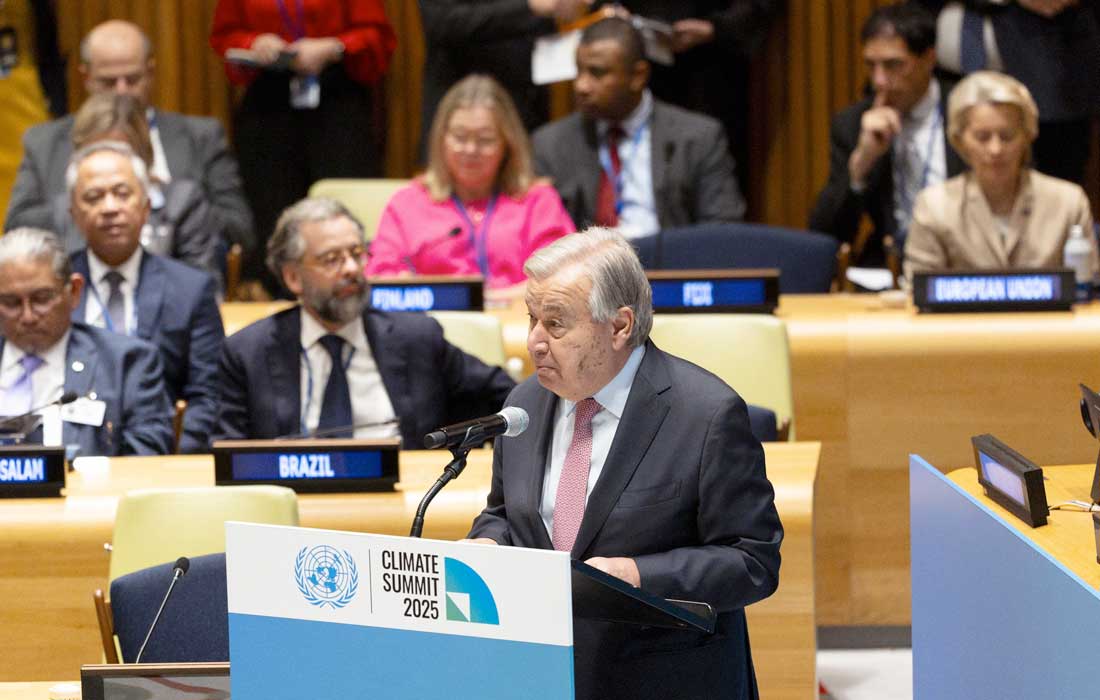

More than 100 countries announced or reaffirmed new climate action plans at a UN high-level summit, aiming for deeper emissions cuts and faster clean energy transitions ahead of COP30.
NEW YORK: In a major show of global momentum, over 100 nations unveiled enhanced national climate action plans during a high-level UN summit held alongside the General Assembly week in New York. The event, convened by UN Secretary-General António Guterres and Brazil’s President Luiz Inácio Lula Da Silva, comes just weeks ahead of COP30, set to be hosted in Belém, Brazil.
The summit focused on fast-tracking climate commitments under the Paris Agreement, as global leaders work toward limiting global temperature rise to 1.5°C. Guterres urged governments to submit new 2035 targets that go “much further and much faster,” specifically calling for dramatic emission cuts, clean energy acceleration, and stronger global cooperation.
He outlined five priority areas: expanding clean energy, reducing methane emissions, protecting forests, cutting industrial emissions, and delivering climate justice for developing nations. Climate experts Johan Rockström and Katharine Hayhoe delivered a sobering assessment of the slow pace of climate action so far, but stressed that achieving the 1.5°C goal is still within reach with urgent global efforts.
Nationally Determined Contributions (NDCs), the core mechanism of the Paris Agreement, were central to the discussions. Brazil committed to slashing greenhouse gas emissions by up to 67 percent and reiterated its deforestation-free goal by 2030. Meanwhile, China pledged to cut net emissions by up to 10 percent from peak levels by 2035, increase non-fossil energy to over 30 percent, and expand renewable capacity sixfold.
The European Union reported a 40 percent emissions drop since 1990 and pledged €300 billion in global climate finance. EU Commission President Ursula von der Leyen said the bloc is intensifying clean energy efforts and deepening international partnerships to support the energy transition.
Other countries also stepped up. Belize plans to generate 80 percent of its electricity from renewables by 2035, reforest 25,000 hectares, and plant one million trees within three years.
As the world prepares for COP30, this renewed push for action signals hope that the next phase of climate commitments will deliver real change — especially in areas most vulnerable to climate impacts. The new pledges reflect growing global consensus that stronger collaboration and accountability are essential to safeguarding the planet.