
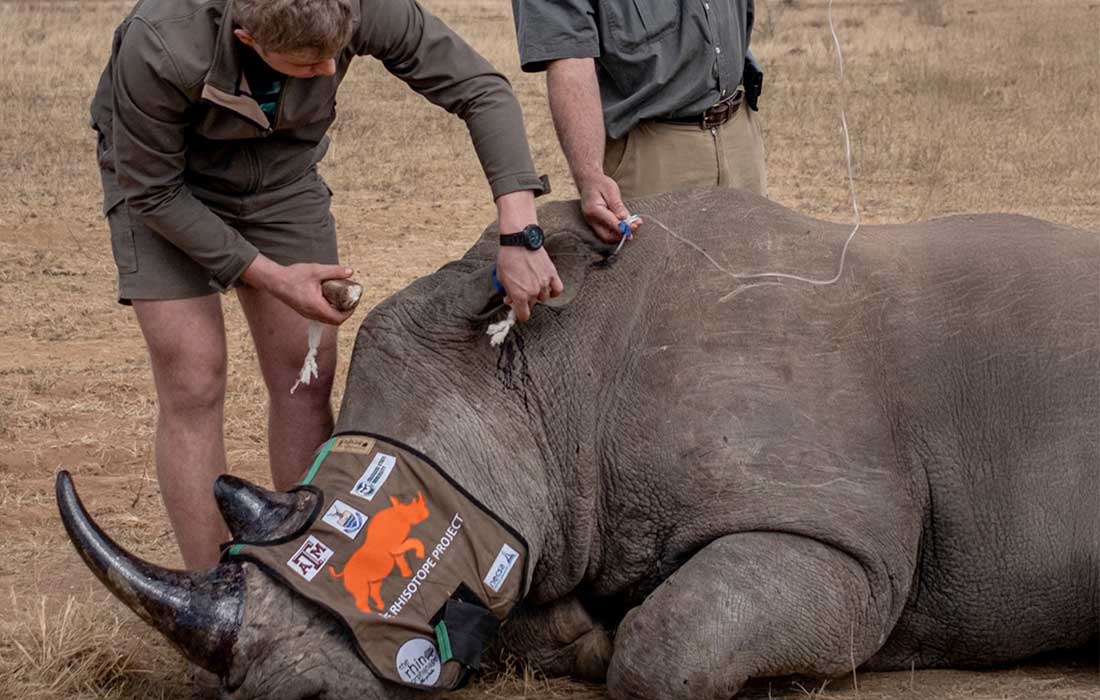

JOHANNESBURG: In a groundbreaking move to combat wildlife trafficking, scientists in South Africa have begun injecting small, harmless doses of radioactive isotopes into rhino horns, making them detectable at airports and border crossings worldwide. The project, known as the Rhisotope Project, could represent a game-changing deterrent in the fight to save critically endangered rhinos from extinction.
The innovative technique has been developed by the University of Witwatersrand and launched in collaboration with anti-poaching organisations across South Africa. The radioactive material is carefully inserted into the horn in quantities that pose no health risk to the animal but are sufficient to trigger standard radiation detection equipment installed at customs checkpoints globally.
With rhino horns highly valued in illegal markets, this technology could help stop the black-market trade by making it nearly impossible to smuggle the horns undetected. “Now, with the Rhisotope Project, you can’t take that horn anywhere. It is radioactive. Sirens go off. It is wonderful,” said Arrie van Deventer, Founder of the Rhino Orphanage.
Launched in 2021, the project saw its first live trial in June 2024 with 20 rhinos — 15 of them treated and five left untreated for study comparison. Health monitoring and cytological evaluations confirmed the process is minimally invasive and safe for the animals.
The Rhisotope Project is one of the first solutions to align science, security, and conservation in such a targeted way. By making rhino horns a radioactive liability to traffickers, the initiative gives law enforcement a new edge and shifts the risk back onto the illegal trade.
With three out of five rhino species classified as critically endangered by the International Rhino Foundation, experts hope this pioneering method will become a global benchmark in conservation efforts — helping to secure the survival of rhinos for future generations.