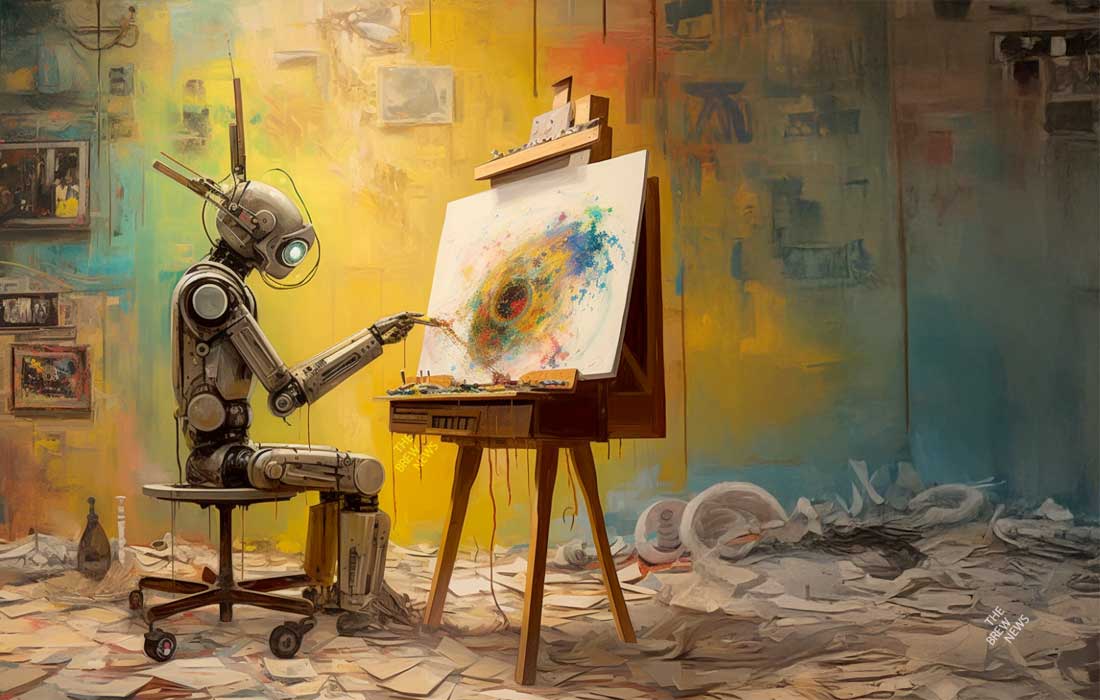

Artificial Intelligence (AI) is a rapidly evolving technology that has begun to influence the way in which the world works. And while useful in yielding insights, optimising search results and making predictions, the use of such technology in creative domains like art has raised questions about creative importance.
Veteran artists all over the world have expressed strong views about AI taking away creative freedom from human art — and reasonably so. Many of them, like Reshma Sainulabdeen, who has been part of the UAE art scene for about 18 years, indulging in many art forms like sand art, art therapy facilitation, fashion designing and faux calligraphy, among many others, have voiced concern. “I believe that art exists in every step that we take, and that’s why it’s so necessary for human touch to be present in the same. So, no matter how advanced AI becomes, it can never truly replicate or be better than human art.”
But will kids today develop their artistic skills the same way we all did growing up? Yes, it’s possible. But with AI developing to the extent that it can generate images in Studio Ghibli style — one of the most unique art styles animation has seen, taking years to perfect — and reducing it to a mere social media trend, do forms of human expression like art really have a future anymore?
In a video that recently went viral of Hayao Miyazaki from 2016, where the idea of incorporating AI into animation is brought up, he replies, “Whoever creates this stuff has no idea what pain is whatsoever.” Human emotions are what create art. We see pain in the swirly strokes and exaggerated colours of Van Gogh’s Starry Night, reflecting his gradually deteriorating mental state at the time. We feel the grief of the author through Studio Ghibli’s Grave of the Fireflies, a story originally written as an apology to Nosaka’s adoptive younger sister, Keiko, for what happened to her as a result of the Pacific War. Both are works of art from different times and are regarded as cultural epitomes of their respective eras. But generations from now, when AI plays a much bigger role in our lives, will people still know the importance of human touch in art — or just partake in trends like converting their pictures into Studio Ghibli-style filtered images on a much larger scale?
With everything being said, technology is only bound to grow over time, and artists can simply adapt to the same without completely rejecting it, according to Sahla Abdullah, a student who is a big fan of Miyazaki’s works and currently doing her Masters at MAHE, Manipal. “While I disapprove of AI taking away from years of an artist’s work without their consent, we can only really move forward if we start integrating it into our works to an extent,” she says. When looking at it from the perspective of progress and development of AI technology, she is right. But can such a balance really be achieved?
Unsurprisingly, AI has also made its way into the world of filming, gaming and software development, according to Aasim Faiz, a software developer working in Dubai with a passion for gaming. “My relationship with art goes way back, so I do feel strongly about AI taking away creative freedom in ANY form of art, be it gaming or making 3D models. I don’t see why it has to take control over the process when it can just be used as a tool to facilitate the same,” he says, when asked about how he felt about AI’s increasingly prominent role in producing “art.”
While the use of generative AI can lead to ethical dilemmas, the technology has been used to assist the process of animation for movies like Flow and Spiderman: Into the Spider-Verse. Flow won an Oscar for Best Animated Feature earlier this year for its brilliant storytelling. What’s most impressive is that the movie was made entirely on a free open-source software, employing a few tools of AI, yet captivating the audience with its story. The Spider-Verse movies incorporated the use of machine learning techniques during the animation process. The creators of both movies have strongly stated that AI should only be used as a tool — not as a creator.
AI has redefined the challenges and opportunities in the art world like never before. If used responsibly, it could improve the art world or, conversely, have adverse effects on the same. It is thus necessary to strike a balance between making the art process more efficient while allowing artists to maintain creative freedom.
This article is contributed by Mariyam Shajil, an aspiring journalist who specializes in writing articles about movies and shows for children from a young adult perspective.
Disclaimer: All views and opinions expressed in The Brew Opinion – our opinion section – are those of the authors and do not necessarily reflect the official policy or position of TheBrewNews.com, the company, or any of its members.