
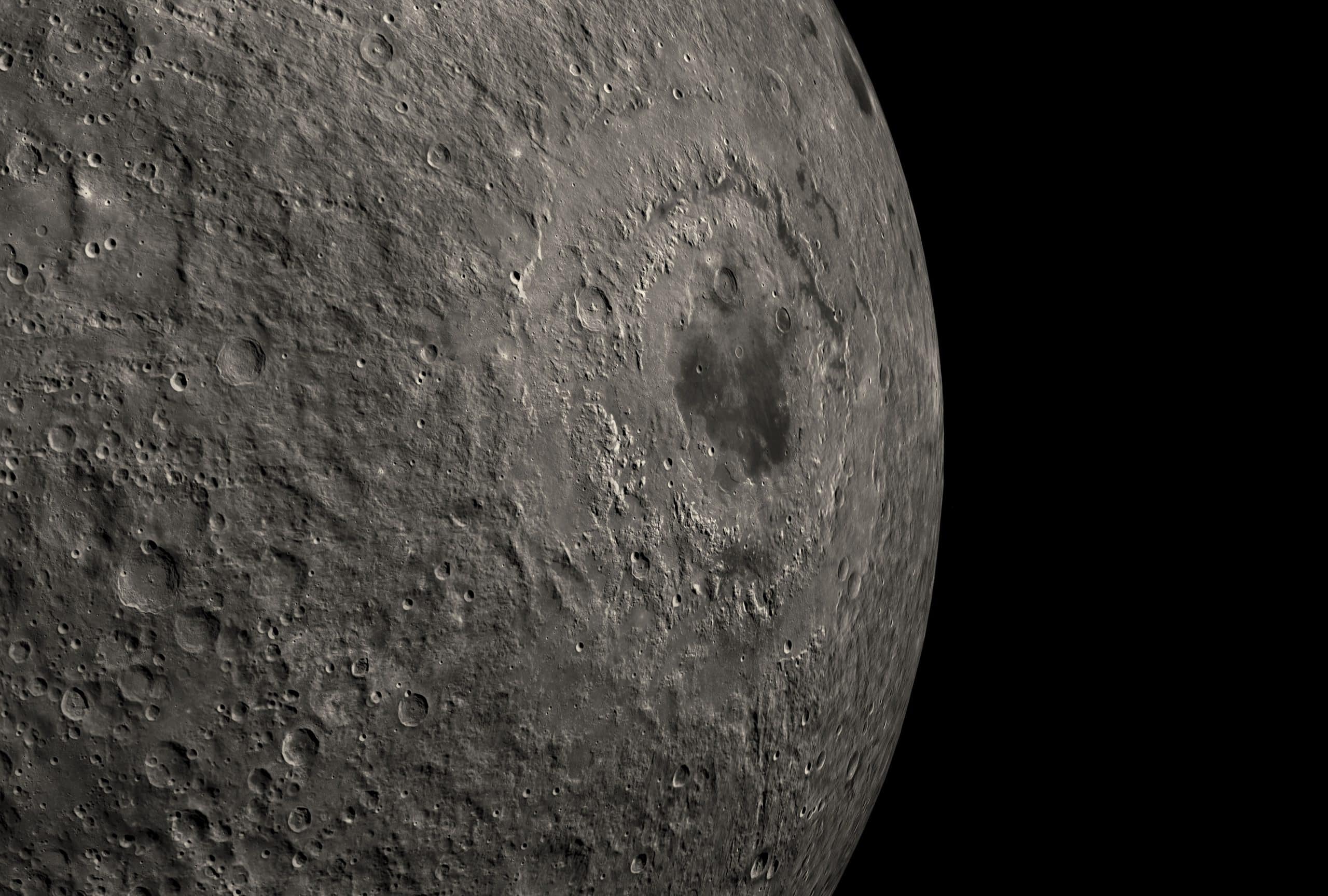

New Chinese research from Chang’e-6 lunar samples shows Moon’s far side mantle is 100°C cooler than the near side.
BEIJING: A groundbreaking study published in Nature Geoscience has revealed that the far side of the Moon is significantly colder deep within its mantle compared to the side facing Earth. The findings are based on lunar rock samples retrieved by China’s Chang’e-6 spacecraft in 2024, marking the first time material from the far side of the Moon has been studied in such detail.
Scientists from the China National Nuclear Corporation, Beijing University, and Shandong University analysed fragments gathered from the Moon’s South Pole-Aitken Basin. The rocks were formed from ancient lava approximately 2.8 billion years ago, originating at around 1,100 degrees Celsius—a full 100 degrees cooler than the formation temperature of rocks from the near side.
Using both the physical rock data and remote sensing comparisons between landing sites, researchers discovered a consistent temperature difference of 70 degrees Celsius between the far and near sides. The study sheds light on the Moon’s geologic evolution and thermal asymmetry.
“The temperature of the lunar mantle on the far side is lower than that on the near side,” said He Sheng, a researcher at the Beijing Research Institute of Uranium Geology. “These temperatures reflect deep interior conditions in the Moon’s past, not surface readings.”
The Chang’e-6 mission builds on the success of 2020’s Chang’e-5, which collected samples from the near side’s Ocean of Storms. This latest milestone cements China’s role at the forefront of lunar exploration and planetary science.