
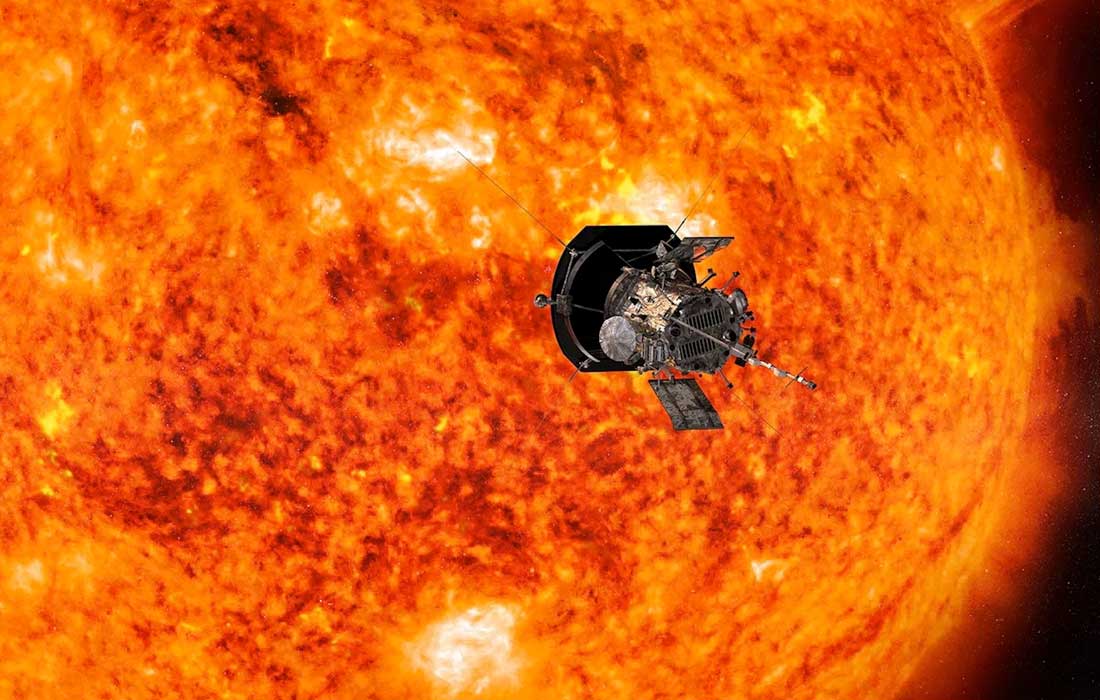

WASHINGTON: NASA has unveiled astonishing images taken from the closest point ever reached by a human-made object near the Sun, thanks to its Parker Solar Probe. These high-resolution visuals, shared on Thursday, provide rare glimpses into the Sun’s outer atmosphere, also known as the corona, and the powerful solar wind that blows across the solar system.
The Parker Solar Probe began its historic approach on 24th December, narrowing the gap to a mere 3.8 million miles (6.1 million kilometres) from the Sun’s surface. NASA confirmed the probe captured data and images “closer to the Sun than we’ve ever been before,” giving scientists a front-row seat to study features of the solar corona and the high-speed solar wind—charged particles that can reach speeds over a million miles per hour.
Launched in 2018, the Parker Solar Probe is roughly the size of a small car and has already made history. In 2021, it became the first spacecraft to enter the Sun’s atmosphere, paving the way for groundbreaking research.
Dr Nicky Fox from NASA remarked, “Parker Solar Probe has once again transported us into the dynamic atmosphere of our closest star. This new data will help us vastly improve our space weather predictions to ensure the safety of our astronauts and the protection of our technology here on Earth and throughout the solar system.”
Scientists expect that continued findings from the Parker mission will revolutionise our understanding of how solar activity affects space weather and technology back on Earth, especially in terms of satellite communication and power grids.