
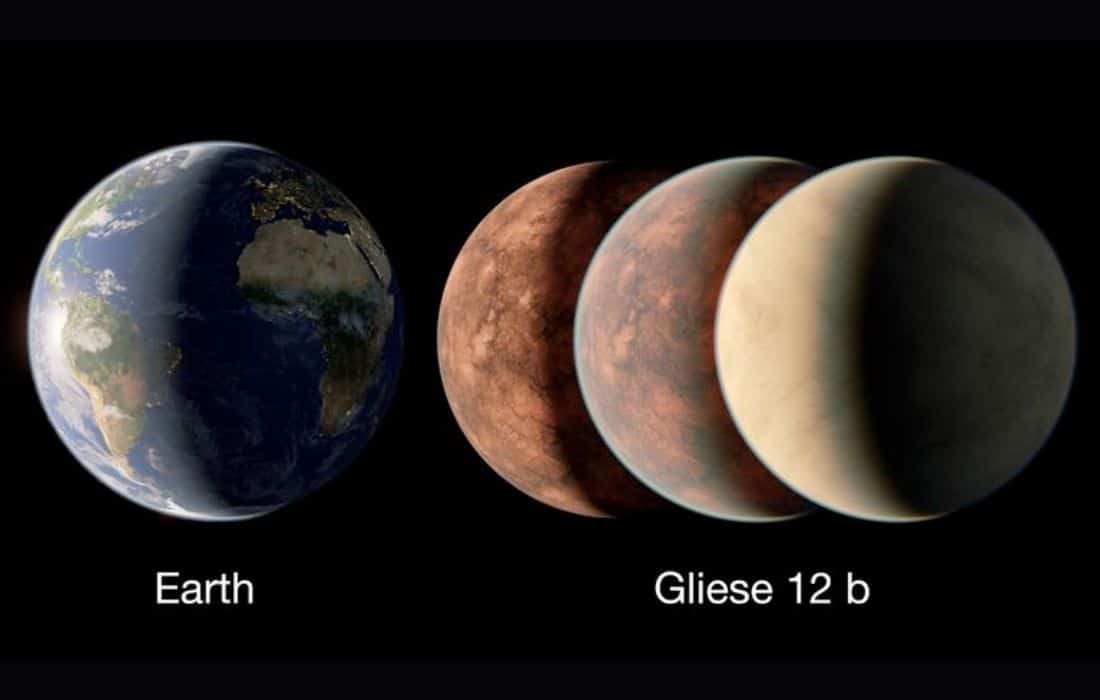

Scientists in the United Kingdom have revealed the discovery of a new planet, “Gliese 12b”, that could possibly support human life. The study found that the planet is “the nearest, transiting temperate, Earth-sized planet found to date.”
Estimates indicate that the temperature on Gliese 12b is around 42 degrees Celsius, according to Larisa Ballithorp, researcher from the University of Edinburgh. Although this temperature may not be ideal for human life, the existence of liquid water on the planet’s surface under these conditions remains possible.
A team of scientists, headed by Ballithorp, utilized NASA’s Transiting Exoplanet Survey Satellite (TESS) to examine exoplanets, pinpointing the location and characteristics of the planet in less than a year.
Earth-sized planets are rare, and studying them more extensively could further our understanding of planets in space, according to Ballithorp. Notably, Gliese 12b provides an opportunity to study its atmosphere, which could offer valuable insights.
Located 40 light years away, it would take Earth’s fastest spaceship approximately 300,000 years to reach Gliese 12b, according to Ballithorp.
Scientists are progressing to the next step, by studying the planet’s atmosphere to deduce if it shares similarities with Earth’s. Ballithorp notes that the planet must have a thin atmosphere which makes it suitable for life, as planets with thick atmospheres tend to be extremely hot.
A year on Gliese 12b is equivalent to 12.8 Earth days due to it orbiting closely around its star. The planet is similar to Venus in size and is located in the constellation Pisces.
Also read: NYU Abu Dhabi researchers use Webb Telescope, reveal insights on giant exoplanet