
FIFA and ASEAN have signed a new agreement to promote football development, launching the FIFA ASEAN Cup and expanding cooperation.
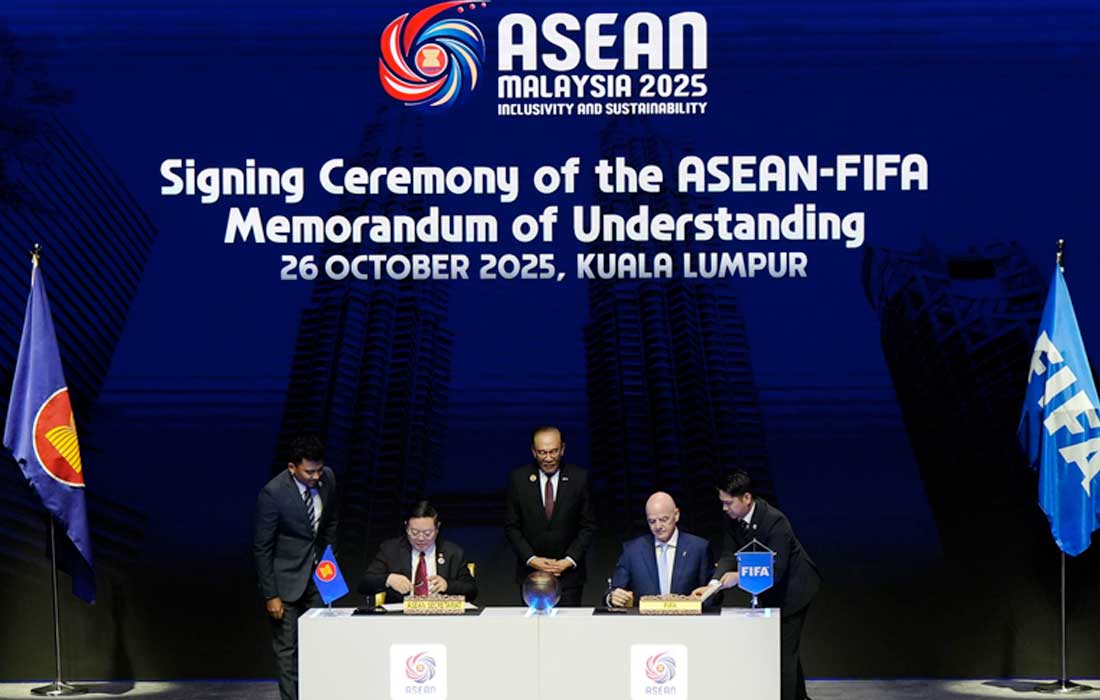
KUALA LUMPUR: FIFA and the Association of Southeast Asian Nations (ASEAN) have signed a renewed five-year Memorandum of Understanding (MoU), expanding their commitment to football development and regional collaboration. The agreement was formalised during the 47th ASEAN Summit in Kuala Lumpur, witnessed by Malaysian Prime Minister and ASEAN Chair Anwar Ibrahim.
The MoU was signed by FIFA President Gianni Infantino and ASEAN Secretary-General Kao Kim Hourn, marking the continuation of the 2019 partnership. This latest agreement aims to deepen collaboration in five key areas: promoting sports integrity, using football to drive social and economic development, enhancing technical growth both on and off the pitch, encouraging inclusion, and supporting environmental sustainability and climate resilience.
A key announcement was the introduction of the FIFA ASEAN Cup, a new regional tournament inspired by the format of the FIFA Arab Cup. The competition will bring together national teams from across Southeast Asia to compete in a celebration of regional unity, football talent and cultural exchange. Infantino expressed that the tournament will help enhance player performance and boost grassroots engagement across ASEAN countries.
The new cup will be developed in partnership with the Asian Football Confederation (AFC), ASEAN Football Federation (AFF) and national football associations. The goal is to create a professional platform that builds regional football standards and offers greater exposure to ASEAN teams on the international stage.
The FIFA–ASEAN alliance also includes expanding programmes such as Football for Schools and continuing to support initiatives tied to youth development, health, and education. This partnership represents an important milestone in building a cohesive and competitive football ecosystem across Southeast Asia, one that prioritises inclusion, integrity, and long-term impact.