
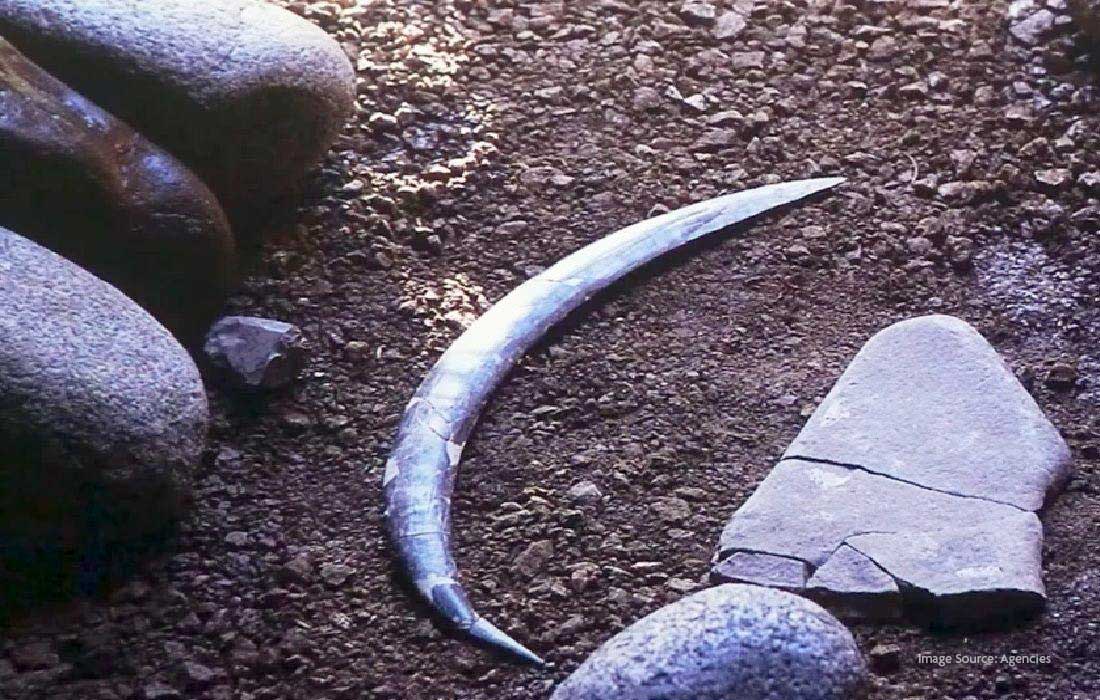

KRAKÓW: A 40,000-year-old mammoth ivory boomerang discovered in a Polish cave is being hailed as the oldest of its kind in the world—despite the fact it doesn’t return when thrown. The ancient tool, found in Oblazowa Cave in southern Poland in 1985, has now been dated using improved radiocarbon techniques, revealing its surprising age and purpose.
Fashioned with extraordinary skill from a woolly mammoth tusk, the curved object likely served as a hunting tool, although experts say it may also have held ritual or symbolic meaning. Its aerodynamic shape indicates it would have flown when thrown, but unlike modern boomerangs, it wasn’t designed to come back.
According to Dr Sahra Talamo from the University of Bologna, the find is “remarkable” and offers a rare glimpse into the advanced craftsmanship and understanding of physics possessed by Homo sapiens more than 40,000 years ago. “It’s the oldest boomerang in the world,” she said, noting it was made for a right-handed user and polished to a smooth finish.
While boomerangs are most commonly associated with Aboriginal Australian culture, evidence now shows their use spanned continents. The oldest Australian boomerang, made of wood, is 10,500 years old, and rock art from 20,000 years ago depicts similar tools. Elsewhere in Europe, wooden boomerangs have been discovered in Denmark and The Netherlands dating back thousands of years.
This Polish boomerang is unique not only in age but in material, as it’s the only one known to be made from mammoth ivory. The new findings, published in the journal PLOS One, were produced by a team of researchers from Poland, Italy, France, Germany, Switzerland and the UK.
The artefact deepens our understanding of early human ingenuity and highlights how prehistoric communities blended function, art, and survival.