
Dr. Richard Scolyer recently provided an update on his health, marking one year since he underwent a groundbreaking treatment for his terminal brain cancer diagnosis.
Last year, the internationally renowned Australian pathologist, Dr. Richard Scolyer, who co-directs the Melanoma Institute Australia, received a grim diagnosis of glioblastoma, an aggressive brain tumor, at the age of 56.
According to sources: “The average glioblastoma survival time is 12-18 months – only 25 percent of patients survive more than one year, and only five percent of patients survive more than five years.”
Known for his pioneering work in melanoma research, Dr. Scolyer had previously achieved success in treating skin cancer using a combination of immunotherapy and surgery. Despite this treatment’s success, it had never been attempted for brain cancer.
Undeterred, Dr. Scolyer decided to undergo his own experimental therapy, making himself ‘patient zero’ to receive this combination of immunotherapy, surgery, radiotherapy, and a personalized vaccine for brain tumors.
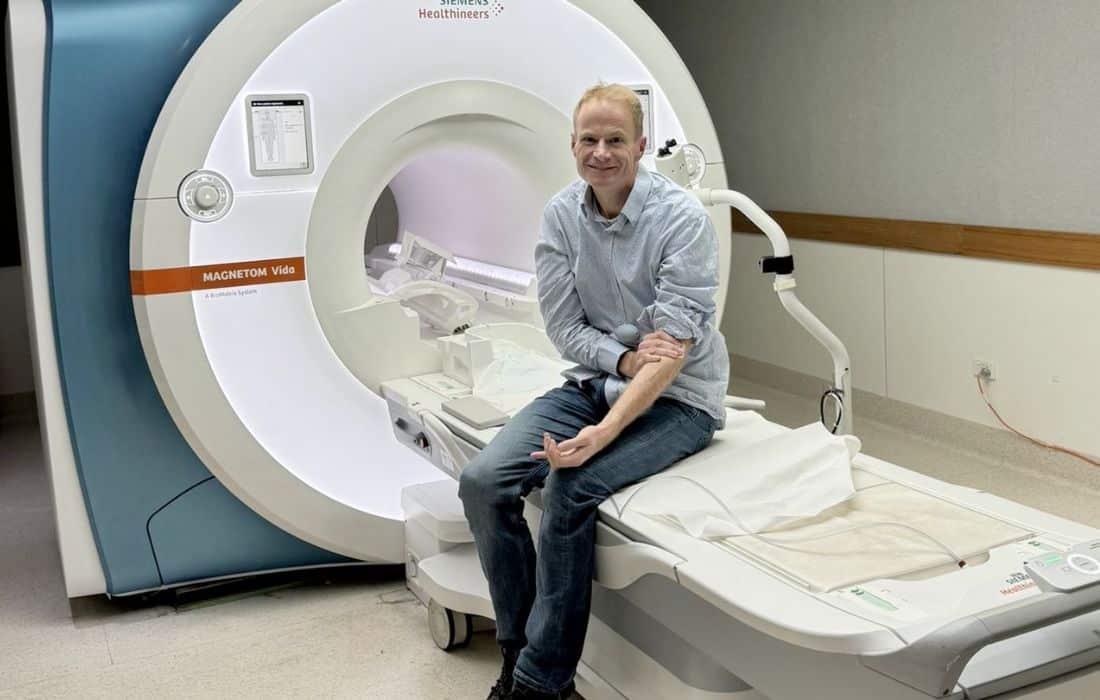
On May 13, Dr. Scolyer took to his social media account to share his one-year post-treatment scan results. The post included two images, one of him undergoing an MRI scan and another of him smiling on the examination table.
The caption stated: “I had brain #MRI scan last Thursday looking for recurrent #glioblastoma (&/or treatment complications). I found out yesterday that there is still no sign of recurrence.
“[…] Thank you to the fabulous team looking after me so well especially my wife Katie & wonderful family!”
He told agencies he was ‘more nervous’ leading up to the scan, but was ‘just thrilled and delighted’ with the results. While he acknowledges the success of the one-year post treatment ‘certainly doesn’t mean that [his] brain cancer is cured’ he adds ‘it’s just nice to know that it hasn’t come back yet’ which means he’s got ‘more time to enjoy life’ with his wife and kids.
Prof Scolyer concluded: “[I] couldn’t be happier.”
Sources: The Brain Tumour Charity
Agency: BBC
Also read: Scientists develop ‘cancer-killing pill’ named after 9-year-old who died of deadly disease