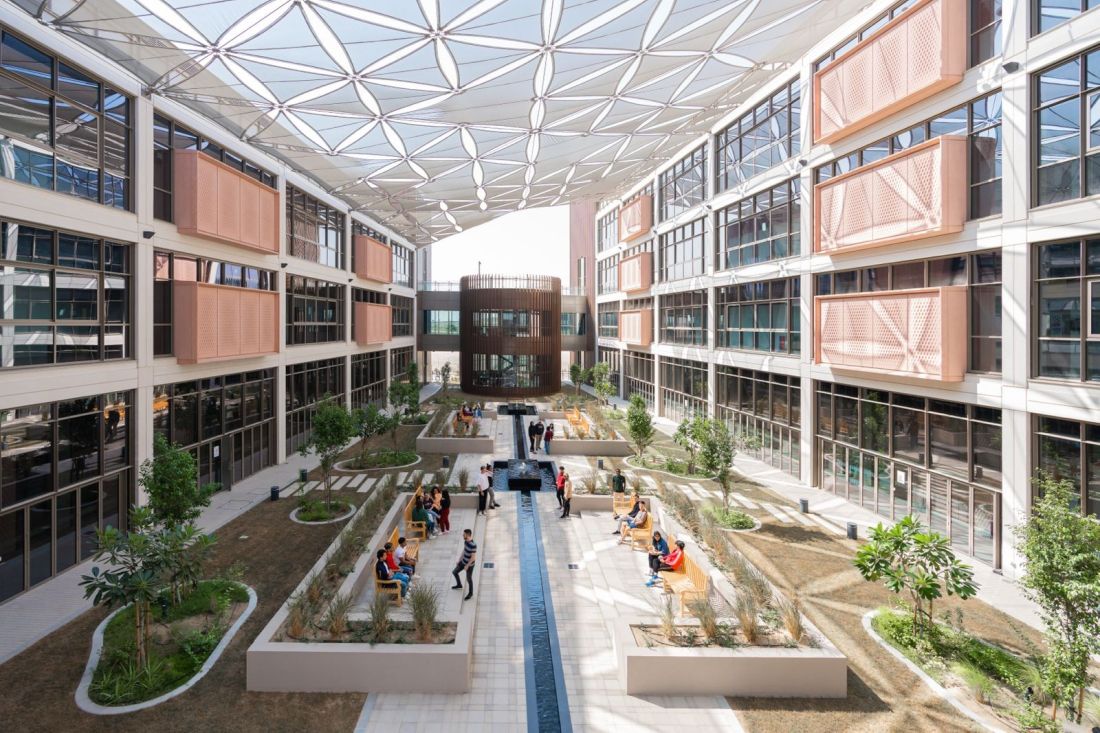

A new study by Dubai International Academic City and Dubai Knowledge Park forecasts a 40% increase in student enrolments by 2030. Dubai higher education growth aligns with its vision to become a global talent hub.
DUBAI: Dubai’s higher education landscape is set to expand rapidly, with student enrolments projected to rise by over 40% by the year 2030. This forecast comes from an exclusive new white paper titled Future Skills and the Workforce of Tomorrow, unveiled by Dubai International Academic City and Dubai Knowledge Park — both part of TECOM Group PJSC — in collaboration with Times Higher Education (THE).
The white paper was presented at the Going Global conference in London, hosted by the British Council. It offers detailed insights into Dubai’s role as a growing global hub for higher education and employment-focused learning.
In the 2024–25 academic year alone, higher education enrolments in Dubai surpassed 42,000. The white paper expects this figure to grow significantly in the next five years, bolstered by the opening of several international university campuses, such as the Indian Institute of Management Ahmedabad (IIMA), which launched its Dubai branch in September 2025.
Marwan Abdulaziz Janahi, Senior Vice President at TECOM Group, remarked, “Education can transform individual prosperity and collective economic growth. Our sector must evolve to meet the demands of tomorrow’s workforce.” He noted that the growth is supported by Dubai’s ambitious D33 Economic Agenda and E33 Education Strategy, which aim to futureproof the emirate’s talent ecosystem.
Dubai’s appeal goes beyond academics. The study found that 73% of students selected Dubai for its career opportunities, industry partnerships, and post-graduation work options. From the employer side, 88% confirmed that Dubai’s graduates bring workplace-ready skills to the table — a clear indicator that the city is successfully linking education with real-world demand.
Dubai is currently home to 41 private higher education providers, 37 of which are international campuses representing 12 countries. Notable institutions include the University of Birmingham, University of Manchester, and University of Strathclyde, all of which operate under TECOM’s Education Cluster.
With a comprehensive academic infrastructure, strong industry links, and a future-focused policy framework, Dubai higher education growth is not just a statistic — it’s a reflection of the city’s vision to become a global centre for talent and innovation.