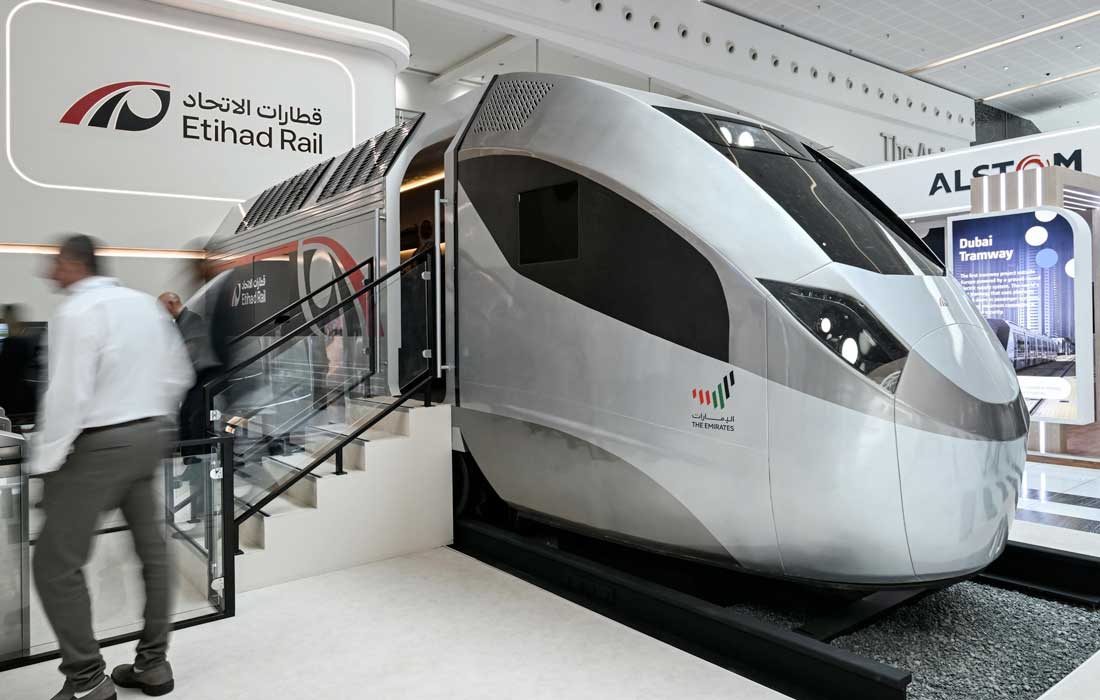

Etihad Rail confirms its UAE-wide passenger train service will launch in 2026, connecting 11 cities with fast, safe, and digital travel.
ABU DHABI: Etihad Rail has officially announced that passenger train services across the UAE are set to commence in 2026, marking a major milestone in the country’s goal of developing a smart, integrated, and safe transport system. The railway network will connect 11 cities from Al Sila in the west to Fujairah in the east, revolutionising domestic mobility.
Speaking at the Global Rail 2025 conference, Azza Alsuwaidi, Deputy CEO of Etihad Rail Mobility, said the network is being built to meet the highest international standards and will feature seamless first- and last-mile connectivity in partnership with municipalities, local transit providers, and digital platforms.
The new railway will enable travel times of 57 minutes from Abu Dhabi to Dubai, 70 minutes to Ruwais, and 105 minutes to Fujairah, with trains designed to accommodate 400 passengers per trip and offer multiple daily journeys. Passengers will enjoy a modern onboard experience with zones for work, reading, or relaxation.
Etihad Rail’s passenger routes will operate on lines completely separated from road traffic, enhancing safety and reducing risks of collision. The network also embraces a “digital tickets first” approach, ensuring ease of access and efficient scheduling.
Stations are being strategically planned to maximise accessibility and passenger convenience, reinforcing the network’s role in supporting families, individuals, and business travellers alike. Among the cities served will be Abu Dhabi, Dubai, Sharjah, Al Dhaid, Al Mirfa, and Ruwais, among others.
Alsuwaidi also shared insights on the upcoming high-speed rail project, which will connect Abu Dhabi and Dubai at speeds of 350 km/h, enabling travel between the two cities in just 30 minutes. This project is expected to add AED 145 billion to the UAE’s GDP over the next 50 years.
The initiative positions the UAE at the forefront of advanced rail technology and sustainable urban mobility, delivering long-term economic and social benefits.