
DUBAI: H.H. Sheikh Hamdan bin Mohammed bin Rashid Al Maktoum, Crown Prince of Dubai, has approved the construction of Dubai’s first aerial taxi vertiport near Dubai International Airport. This groundbreaking initiative will make Dubai the world’s first city to introduce urban aerial transport, featuring a state-of-the-art aerial taxi take-off and landing network.
Spanning 3,100 square meters, the vertiport will be designed to complement Dubai’s modern skyline and provide passengers with a unique, comfortable, and seamless mobility experience. It will include designated zones for take-off and landing, aircraft charging, a dedicated aerial taxi apron, and parking facilities. With a capacity of around 42,000 landings annually, the vertiport is expected to serve approximately 170,000 riders per year.
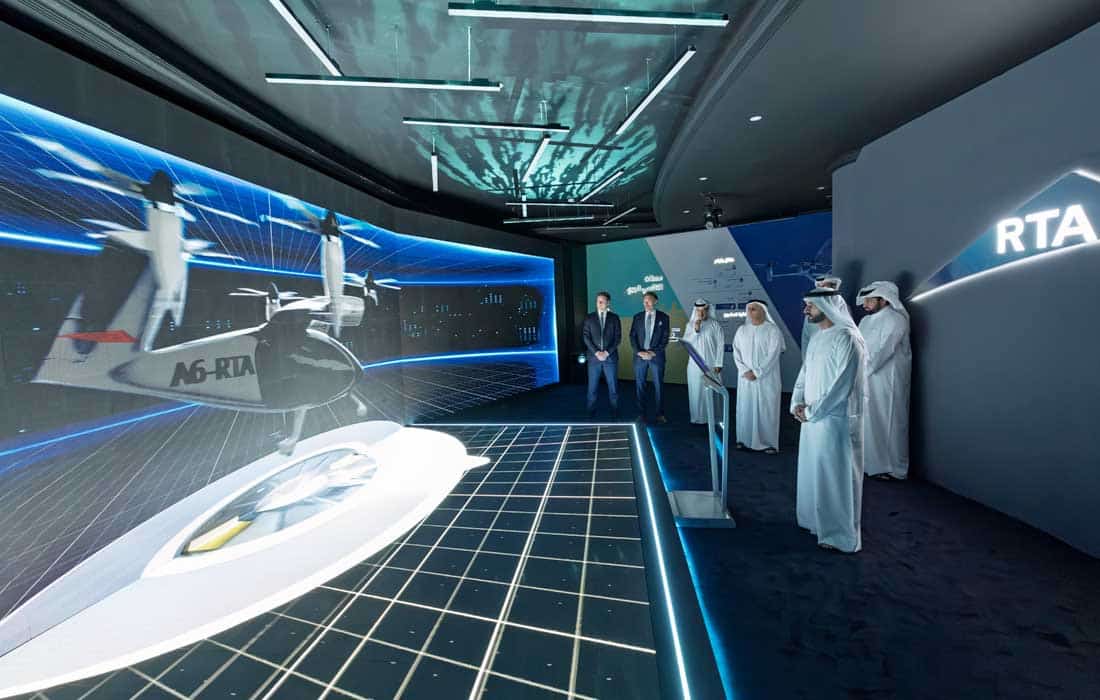
Upon his visit to RTA headquarters, Sheikh Hamdan was greeted by Mattar Al Tayer, Director-General and Chairman of RTA, senior officials, and representatives from Joby Aviation and SkyPorts, the companies responsible for the aerial taxi and vertiport infrastructure. Sheikh Hamdan was presented with the vertiport’s contemporary design, which reflects Dubai’s iconic urban style, providing air-conditioned facilities built to international safety standards.
Also read: Apple offers Indonesia US$10 million to reverse its iPhone ban
The aerial taxi service is scheduled to launch in Q1 2026, with the Joby S4 aerial taxi at its core. This electric vehicle, capable of vertical take-off and landing, will provide sustainable, zero-emission flights, offering passengers safety, comfort, and speed. It will have a range of up to 161 kilometers, a maximum speed of 321 km/h, and can carry four passengers and a pilot. The aerial taxi generates less noise than traditional helicopters.
In its initial phase, the service will operate from four strategic locations near Dubai International Airport, Downtown Dubai, Dubai Marina, and Palm Jumeirah, significantly reducing travel time. The service will also integrate with other public transport modes, such as e-scooters and bicycles, enhancing city-wide connectivity.