
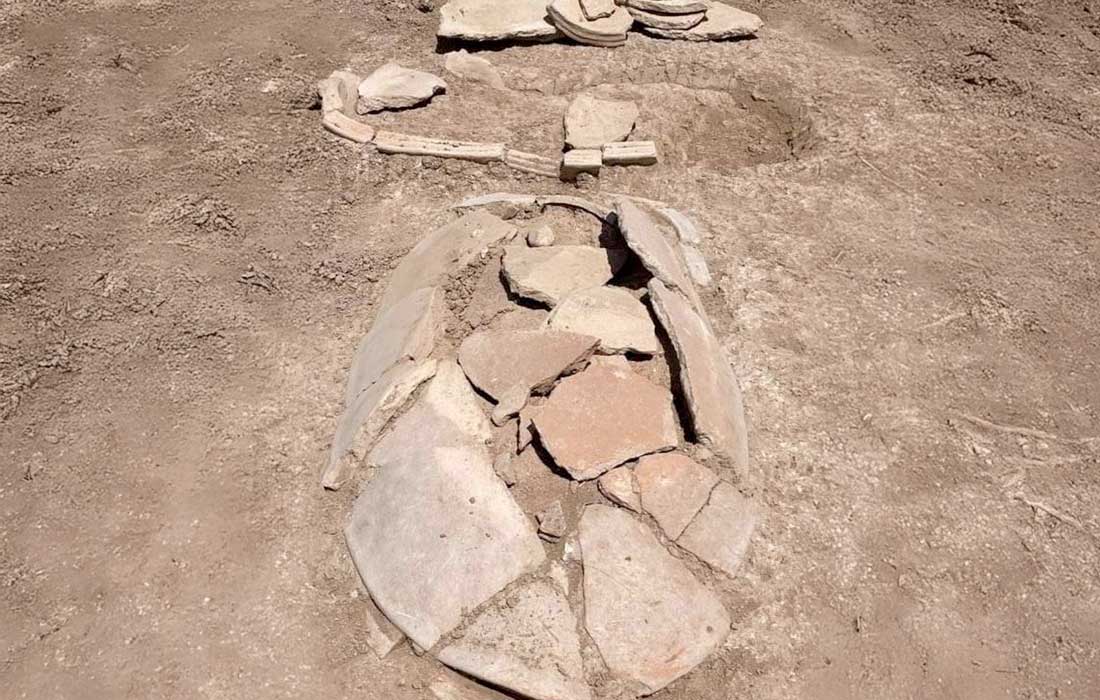

Archaeologists in Iraqi Kurdistan uncover a 5,000‑year‑old city with the largest known clay‑coffin cemetery after Mosul Dam water receded, revealing critical Bronze and Hellenistic era artefacts.
DUHOK: A remarkable discovery has been made in Iraq’s Kurdistan Region, where archaeologists uncovered the remains of a 5,000-year-old city after falling water levels in the Mosul Dam revealed long-hidden ruins. Experts are calling it one of the most important archaeological finds in recent years. The find has also reignited discussions about how climate change is unintentionally opening windows into the ancient past.
The site, located near Khanke in the Semel district, includes what is thought to be the largest cemetery of its kind ever found in the region. Excavations have revealed at least 40 burials inside clay coffins, dating back to the Hellenistic period around 300 B.C. Teams are racing against time to document and preserve the fragile remains before rising waters reclaim the area.
In addition to the burials, archaeologists have unearthed pottery and artefacts spanning an extraordinary timeline. Items trace back to the Nineveh V period, moving through the Early and Middle Bronze Ages, the Mitanni kingdom, the Neo-Assyrian Empire, and into the Hellenistic and Islamic eras. This wide sweep of history makes the discovery invaluable for understanding how cultures evolved in Mesopotamia, often called the cradle of civilisation.
The receding waters of the Mosul Dam have, in recent years, exposed several archaeological sites. While this reflects the growing threat of drought and climate change, it has also given researchers rare opportunities to study ruins that had been lost beneath the reservoir for decades. Experts stress that while nature’s extremes have exposed these treasures, urgent conservation is vital to ensure they are not lost again to rising waters or environmental damage.