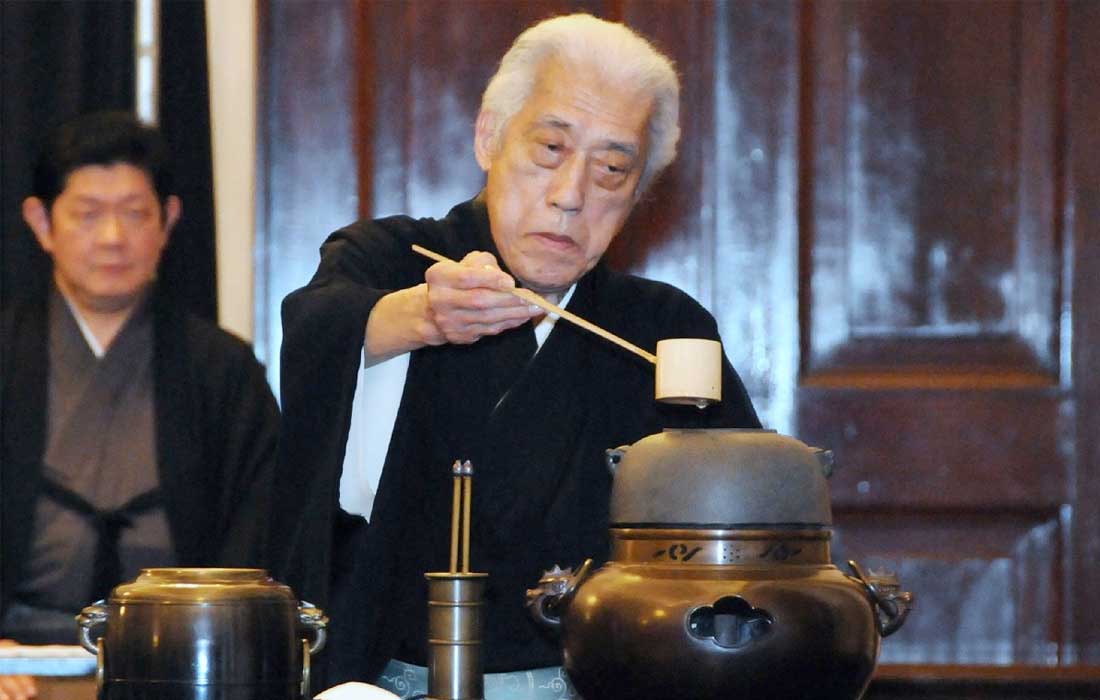

Sen Genshitsu, a tea ceremony icon and global peace advocate, has died aged 102. He led Urasenke and promoted tea as a tool for peace.
KYOTO: Sen Genshitsu, one of Japan’s most celebrated masters of the tea ceremony and a lifelong advocate for world harmony through cultural exchange, has passed away at the age of 102. He was the 15th iemoto—or grand master—of the Urasenke school, one of Japan’s three major schools of tea.
Widely respected as a global peace tea ambassador, Sen Genshitsu spent decades sharing the principles of Japanese tea ceremony with the world, driven by his philosophy of “peacefulness through a bowl of tea.” He travelled to over 60 countries and served tea to heads of state, royalty, and religious leaders, including Queen Elizabeth II, Pope John Paul II, and U.S. President George W. Bush.
Born into the Urasenke family in Kyoto in 1923, Sen Genshitsu was trained as a kamikaze pilot during World War II. But after Japan’s surrender, he turned his focus to peace. In 1951, he travelled to the United States to introduce the Japanese tea tradition and began a lifelong mission of promoting global harmony through cultural dialogue.
He formally became the head of Urasenke in 1964, serving until 2002, after which his son succeeded him. Under his leadership, Urasenke grew internationally, establishing tea schools and cultural centres around the globe.
As a global peace tea ambassador, Sen Genshitsu held notable roles such as UNESCO Goodwill Ambassador and a special assistant to Japan’s foreign minister. In 1997, he received Japan’s prestigious Order of Culture—the first ever from the tea world. In 2020, France awarded him the Legion of Honour in the rank of commander.
Today, Urasenke operates 167 chapters in Japan and continues his legacy abroad. Sen Genshitsu’s life exemplified the quiet power of tradition as a bridge between cultures and as a pathway to peace.