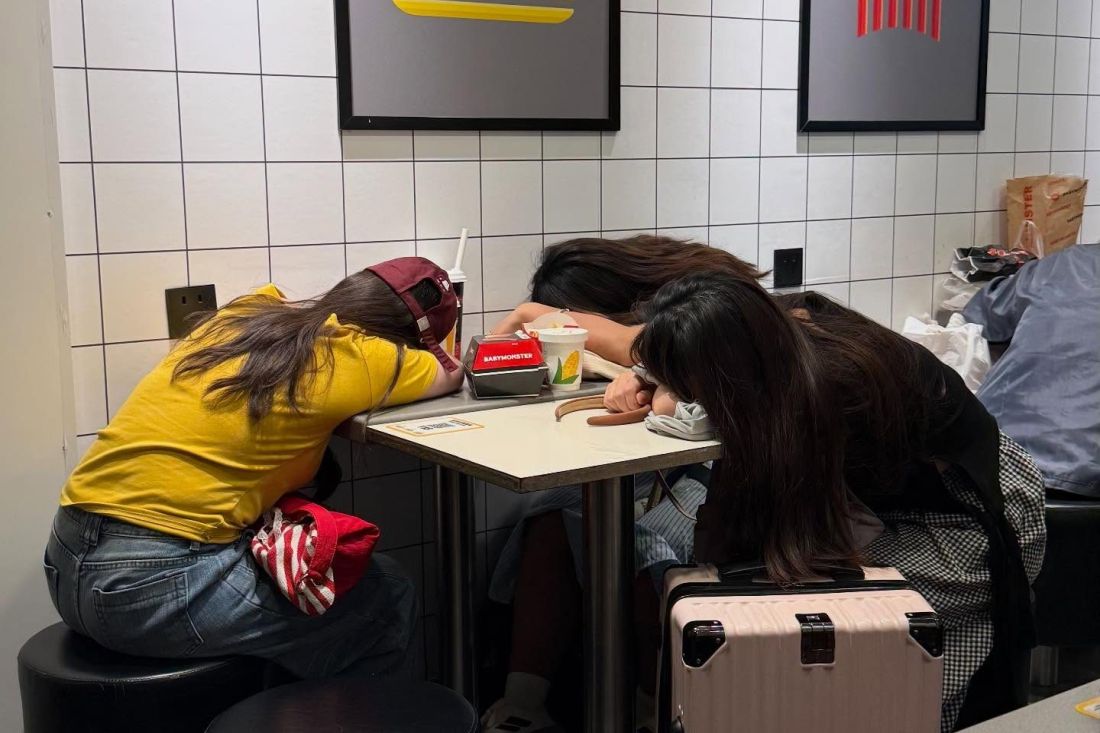

McRefugees are people who sleep overnight in 24-hour McDonald’s outlets, a phenomenon seen in Japan, Hong Kong, and mainland China.
The term McRefugee may sound unusual at first, but it describes a very real social phenomenon. The word refers to individuals who stay overnight inside 24-hour McDonald’s restaurants, often using the fast-food chain as an informal shelter.
The expression originated in Japan as makku nanmin, meaning “McDonald’s refugee,” before being gradually replaced by nettokafe nanmin (“net café refugee”), as internet cafés also became common overnight shelters. In Japan, many of these individuals were day labourers or teenagers who found McDonald’s a cheaper and safer alternative to hostels or net cafés.
The trend later spread to Hong Kong, where it became known as mahk naahn màhn. Here, the phenomenon took on new layers: some McRefugees became McGamers, using the restaurants’ bright lights and free seating to play video games overnight. By 2015, the issue gained global attention when a woman was found dead in a 24-hour McDonald’s in Kowloon Bay. Reports at the time estimated that among Hong Kong’s 1,600 homeless individuals, about 250 were McRefugees.
A 2018 survey by the Society for Community Organization revealed 384 McRefugees in Hong Kong alone. That same year, the topic inspired the film I’m Livin’ It, a play on McDonald’s slogan “I’m loving it.” The movie highlighted the struggles of people who, caught between rising living costs and unstable work, turn to 24-hour outlets as a last resort for shelter.
Mainland China also saw the rise of McRefugees after McDonald’s launched its first 24-hour outlets there in 2006. The trend underscores the hidden realities of urban homelessness across Asia, where public spaces like restaurants and cafés become makeshift refuges for those who cannot afford housing.
While McDonald’s does not formally provide housing, its round-the-clock availability and relatively safe, brightly lit interiors have made it an unexpected refuge for many. The phenomenon of McRefugees is now recognised as part of the broader conversation on urban poverty, housing shortages, and the search for dignity in everyday survival.
(Source- Wikipedia)