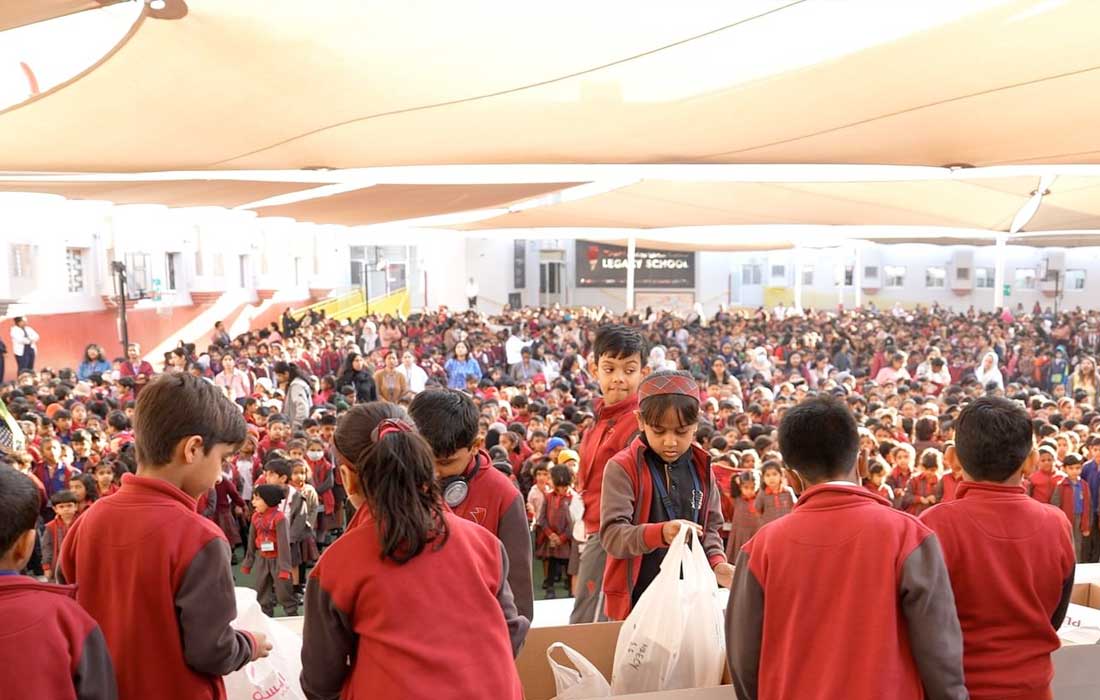
DUBAI: The Digital School, a Mohammed bin Rashid Al Maktoum Global Initiative, has launched the second edition of the ‘Donate Your Own Device’ campaign in partnership with Emirates Red Crescent. The campaign, titled ‘Donate Your Own Device 2.0’, aims to collect and refurbish 100,000 used electronic devices to support students from underprivileged backgrounds around the world.
Following the success of its 2023 debut, which saw over 50,000 devices collected and 120 tonnes of electronic waste recycled, this year’s campaign takes a step further. It combines education, sustainability, and humanitarian work by recycling e-waste into valuable digital learning tools. Devices collected will be either reused or sustainably recycled, helping bridge the digital divide while reducing global e-waste.
The Digital School is calling on individuals and organisations to donate devices or make financial contributions through official channels, including the website www.donateyourowndevice.org or via SMS for Etisalat (2441) and Du (3551) subscribers.
Omar Sultan Al Olama, Minister of State for Artificial Intelligence and Chairman of the Digital School Board, described the campaign as an innovative integration of environmental responsibility and social empowerment. He highlighted its transformation into a permanent initiative that fosters digital equality and long-term social impact.
The campaign also has strong backing from Dr. Hamdan Musallam Al Mazrouei, Chairman of the Emirates Red Crescent. He noted its alignment with the United Nations’ goal of ensuring quality education for all and praised the Digital School for reaching more than 500,000 students in 33 countries.
The initiative partners with Ecyclex and receives support from the Ministry of Climate Change and Environment. It is expected to prevent over 200 tonnes of electronic waste and cut carbon emissions significantly.
The Digital School, founded by His Highness Sheikh Mohammed bin Rashid Al Maktoum in 2020, offers flexible digital learning for vulnerable communities. It delivers content in five languages, combining distance and blended learning models tailored to underserved populations.