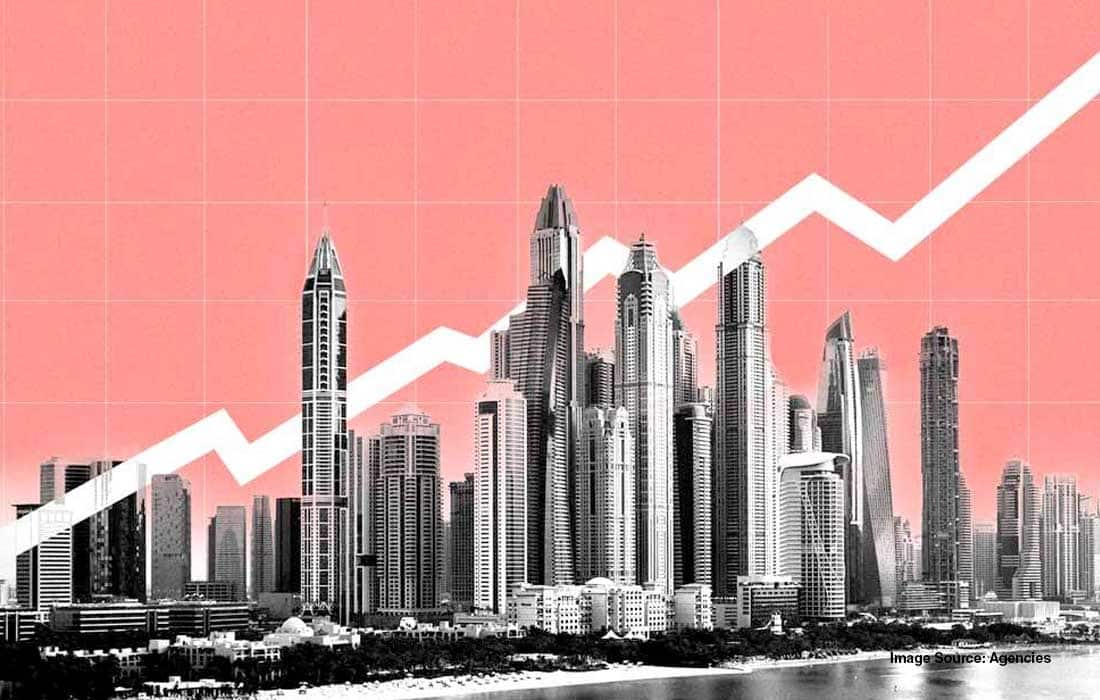
The UAE’s economic growth is set to lead the Gulf Cooperation Council (GCC) by 2025, primarily driven by its non-oil sector, as projected by the International Monetary Fund (IMF). Speaking at a recent conference on the Middle East and Central Asia’s economic outlook, IMF representatives noted the UAE’s non-oil sector is expected to grow by 4 to 5 percent, reflecting effective economic policies.
Also read: Dubai Reef completes fabricating first 1,000 purpose-built reef modules
The UAE’s strategic adaptability to global shifts has bolstered its position as a prominent hub, bridging major economic blocs. Despite global challenges, the nation has successfully maintained high growth rates, leveraging digital advancements to stay competitive. Key factors supporting this outlook include investments in technology, renewable energy, and climate-focused projects, alongside efforts to diversify investments and enhance sustainability. These initiatives have further positioned the UAE as a top destination for foreign investments.
Looking back, the UAE’s response to the COVID-19 pandemic demonstrated remarkable resilience, with accelerated adoption of advanced technologies that improved services and competitiveness. Significant events like Expo 2020 Dubai and the upcoming COP28 climate conference continue to enhance the UAE’s reputation as a global economic and innovation centre.
The IMF highlighted that the UAE, especially Dubai, is seen as a safe and strategic destination for investors. Future investments in promising sectors are expected to support economic expansion and open new growth avenues for the UAE and Dubai.
Also read: Sheikh Mohammed launches education continuity programmes in Lebanon
For the Middle East region, economic prospects differ by country, with the IMF stressing the need to stabilise economies and improve medium-term growth. The Fund has extended $13.4 billion in financial support across the region this year, projecting a regional growth rise from 2.1 percent in 2024 to 4 percent in 2025.