
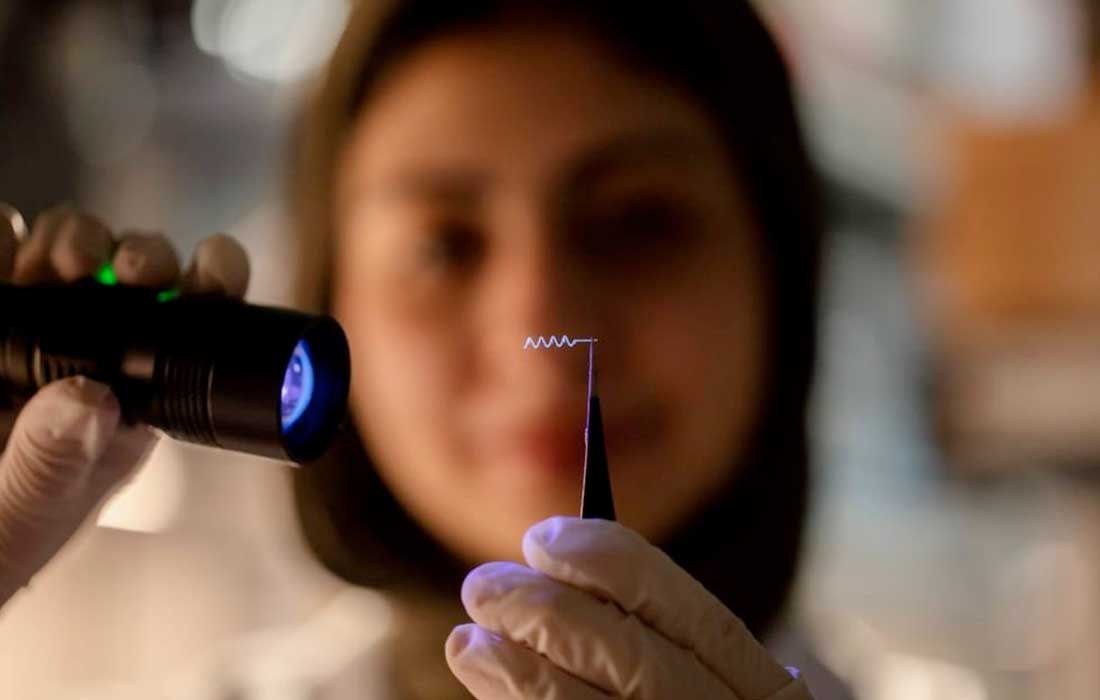

NYU Abu Dhabi scientists have developed a brain implant that enables precise, multi-region drug delivery for treating neurological disorders.
ABU DHABI: Scientists at New York University Abu Dhabi (NYUAD) have unveiled a breakthrough brain implant capable of delivering drugs to multiple brain regions with high precision. The innovation offers new hope for treating complex neurological disorders, including epilepsy, Parkinson’s disease, and glioblastoma.
The new implant, named SPIRAL (Strategic Precision Infusion for Regional Administration of Liquid), is a thin, flexible tube with multiple outlets, allowing for the targeted release of medication across various parts of the brain. This design offers a safer, more effective way to treat brain conditions compared to traditional single-point drug delivery systems.
The research was led by Khalil Ramadi, Assistant Professor of Bioengineering at NYU Abu Dhabi and NYU Tandon. “Neurological disorders often come from very specific regions of the brain, but our current tools for targeting these areas are limited,” said Ramadi. “SPIRAL allows us to reach several regions at once without adding extra risk.”
Co-lead researcher Batoul Khlaifat, a research assistant at NYUAD, added: “SPIRAL makes it possible to distribute drugs more evenly and across larger regions, while still being safe and minimally invasive.”
The device is particularly promising for diseases like glioblastoma, where treatments must bypass the blood-brain barrier and target large brain volumes. “Our helical form with tuned, evenly spaced outlets lets us cover more tissue from one insertion,” explained NYUAD alum and PhD candidate Mahmoud Elbeh.
The NYU Abu Dhabi brain implant is engineered for equal flow across all outlets, using computational fluid dynamics (CFD) to calibrate the diameter of each port. The design could potentially be adapted for other applications, including electrical brain stimulation and drug delivery to solid organs.
This innovative device could reshape how medical professionals deliver targeted therapies for brain-related illnesses, with minimal invasiveness and higher precision. The research team is now exploring additional applications and clinical translation opportunities.