
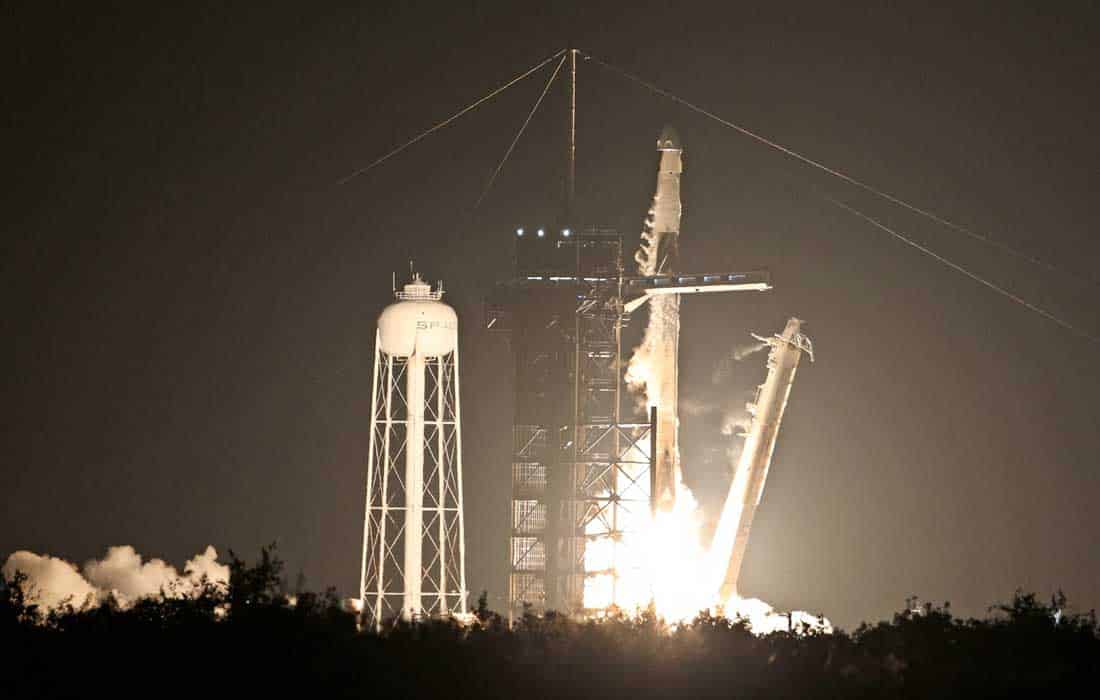

FLORIDA: SpaceX has successfully launched 28 new Starlink satellites into orbit, further expanding its global internet coverage. The mission took off from Cape Canaveral Space Force Station on Monday aboard a Falcon 9 rocket.
In a textbook operation, Falcon 9’s first stage booster returned to Earth just eight minutes after liftoff, landing smoothly on the Just Read the Instructions droneship stationed in the Atlantic Ocean. This particular booster has now completed 17 missions, including 10 previous Starlink deployments.
With this latest batch, the Starlink constellation—already the largest in history—continues to grow. SpaceX currently operates over 7,100 active Starlink satellites in Low Earth Orbit (LEO), aiming to provide high-speed internet to even the most remote locations worldwide.
The Starlink network is designed to bridge digital divides, offering connectivity where traditional infrastructure falls short. As more satellites join the fleet, speeds and coverage are expected to improve, making Starlink a strong competitor in the global broadband market.
SpaceX has been launching Starlink satellites at a rapid pace, with near-weekly missions ensuring continuous expansion. As the constellation grows, the company is also working on enhancing its direct-to-device capabilities, which could bring satellite-powered mobile coverage in the near future.
With plans to deploy thousands more satellites, SpaceX’s vision of global connectivity is becoming a reality—one launch at a time.