
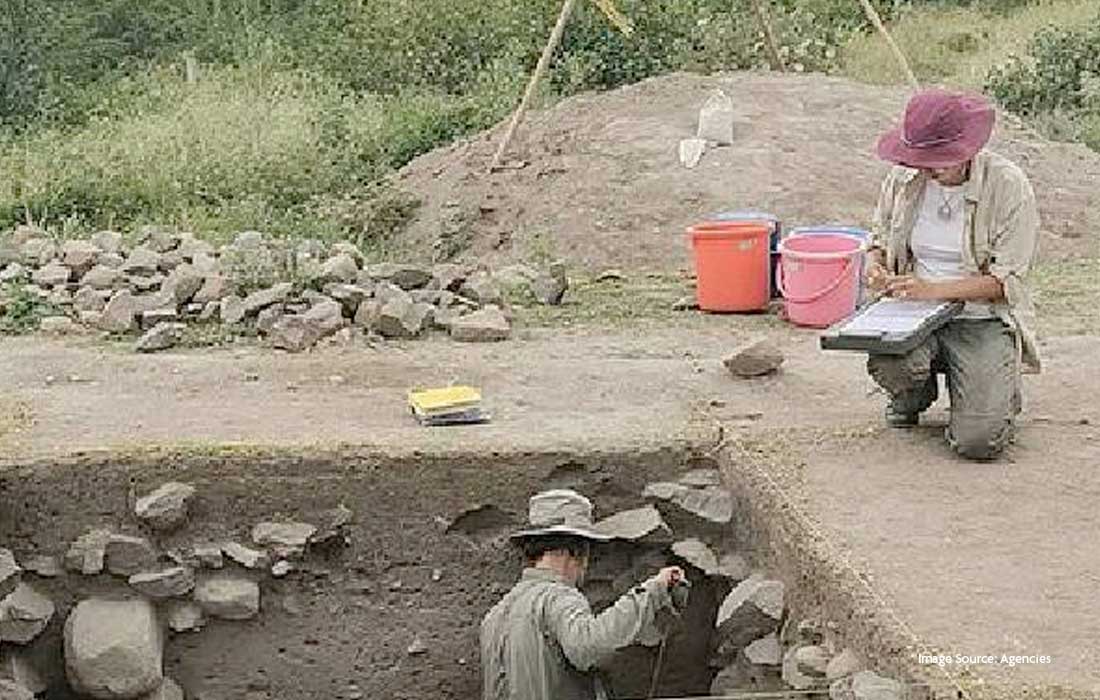

RAICHUR: A major archaeological discovery in Karnataka’s Maski town in South India has revealed artefacts estimated to be 4,000 years old, offering fresh insights into the region’s ancient civilisation. The find was made near Mallikarjuna Hill and the Anjaneya Swamy Temple in Raichur district, where excavation efforts have unearthed a range of artefacts including clay pots, utensils, tools, and artistic items.
Led by Professor Dr Andrew M Bauer from Stanford University, Dr Peter G Johansen from McGill University, and experts from Shiv Nadar University, the excavation has been underway for over three months. A team of more than 20 researchers from India, the US, and Canada have been studying the site’s historical layers and artefacts.
These artefacts date back to between the 11th and 14th centuries BCE and are believed to signify an advanced and settled community. According to researcher Kadambi, the items discovered point to consistent human habitation and evolving cultural practices in the area some 4,000 years ago.
Maski is already notable in Indian archaeology for the discovery of an Ashokan inscription, and this latest find reinforces the town’s historical importance. Researchers had earlier marked 271 potential excavation sites, and the current dig around Mallikarjuna Hill and the temple area confirms the presence of long-term settlements.
ರಾಯಚೂರು ಜಿಲ್ಲೆಯ ಮಸ್ಕಿ (Maski) ಪಟ್ಟಣದ ಮಲ್ಲಿಕಾರ್ಜುನ ಬೆಟ್ಟ ಮತ್ತು ಆಂಜನೇಯ ಸ್ವಾಮಿ ದೇವಾಲಯ (Anjaneya Temple) ಸುತ್ತಲೂ ನಡೆದಿರುವ ಉತ್ಖನನದಲ್ಲಿ (Excavation) ಮಾನವನ ನೆಲೆಗೆ ಸಂಬಂಧಿಸಿದ ಸುಮಾರು 4000 ವರ್ಷಗಳ ಹಿಂದಿನ ವಸ್ತುಗಳು ಪತ್ತೆಯಾಗಿದೆ.#Raichur #Ballari #Koppal #Maski pic.twitter.com/zTChiwKje1
— Ballari Tweetz (@TweetzBallari) July 20, 2025
This breakthrough has the potential to reshape our understanding of ancient South Indian history, adding to evidence of early civilisations that existed in harmony with nature and developed unique cultural identities. Historians and archaeologists are hopeful that further excavation will unlock even more about the early lives of the people of Maski.
The discovery highlights the value of collaborative research and international academic partnerships in deepening our knowledge of the subcontinent’s ancient past.