
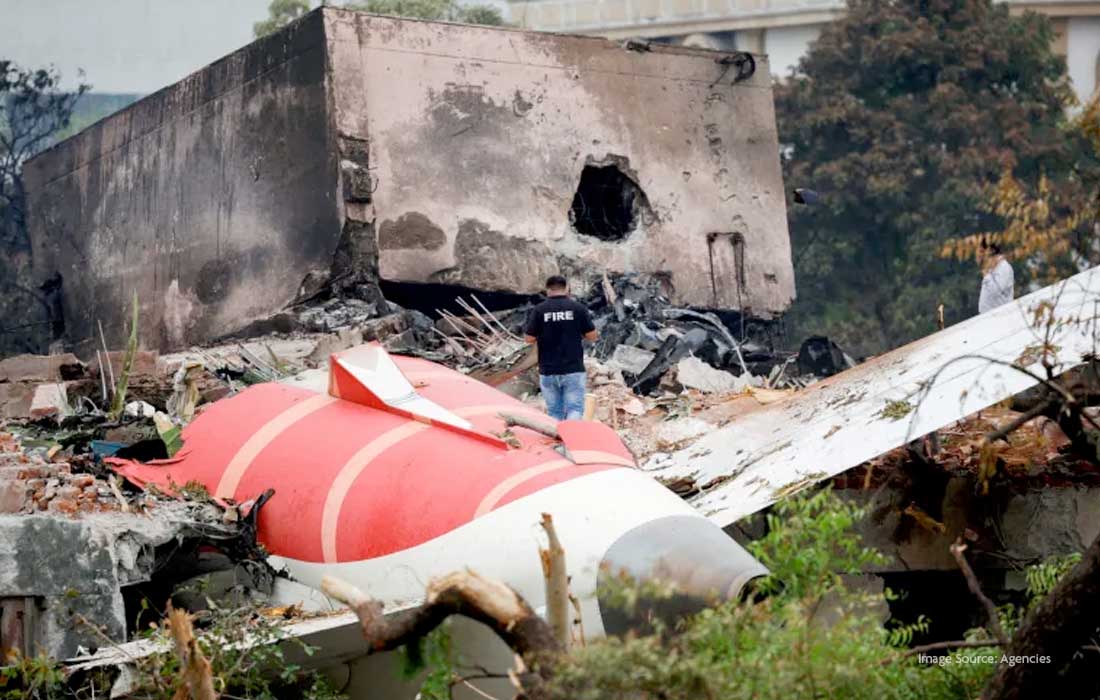

AHMEDABAD: A preliminary investigation report has revealed pilot confusion over engine fuel switches as a key factor in the tragic Air India crash that killed 260 people last month. The Boeing 787 Dreamliner, en route from Ahmedabad to London, crashed shortly after takeoff on 12 June, marking the deadliest aviation disaster in a decade.
India’s Aircraft Accident Investigation Bureau (AAIB) reported that both engines lost thrust after their fuel control switches were moved to “cutoff,” leading to an immediate power loss. The ram air turbine—a backup power source—deployed seconds after takeoff, signalling critical engine failure.
The cockpit voice recorder captured one pilot asking, “Why did you cut off?” with the other replying, “I did not do so,” suggesting both were unaware of the simultaneous switch activation. This raised serious concerns over cockpit procedures and possible mechanical or human factors.
Experts noted that the 787’s fuel cutoff switches are designed with safety locks to prevent accidental operation. However, in 2018, the US FAA had recommended but not mandated inspections of these switches—advice Air India did not follow. The switches’ functionality and design are now under scrutiny by both Indian and international aviation authorities.
The AAIB report did not assign blame but pointed out the urgency of reviewing the switch placement and cockpit ergonomics. Boeing and General Electric, the aircraft and engine manufacturers, are cooperating in the investigation. No immediate safety action has been recommended, although monitoring across other airlines has intensified.
Meanwhile, the Airline Pilots’ Association of India rejected implications of pilot error, and families of victims expressed dissatisfaction with what they call a vague preliminary report. They have urged for full transparency and accountability as the investigation continues.
This incident has sparked renewed debate about global aviation safety protocols and India’s regulatory oversight, particularly regarding compliance with international advisories.