
The UAE-India Business Council has released a landmark report highlighting how India-UAE CEPA is expanding into AI, sustainability, and space.
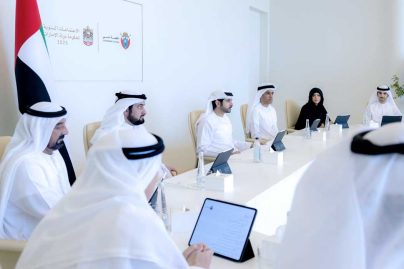
Dubai: In a landmark step to further strengthen the India-UAE economic partnership, a high-level closed-door meeting hosted by the UAE-India Business Council – UAE Chapter (UIBC-UC) was convened today in Dubai, bringing together top officials and business leaders from both nations.
A central focus of the discussions was the Comprehensive Economic Partnership Agreement (CEPA) and its transformative impact on the India-UAE economic corridor. In the first half of 2025 alone, the agreement enabled a record US$37.6 billion in non-oil bilateral trade—a 33.9% increase over the same period last year. CEPA’s success has extended well beyond trade volumes, driving sectoral diversification with strong growth in areas such as gems and jewellery, food processing, telecom, green energy, and digital services.
Moreover, CEPA has catalysed new collaboration across emerging sectors including artificial intelligence, space technology, sustainability, and financial integration, significantly expanding the strategic scope of the partnership. Indian states are increasingly leveraging CEPA to attract targeted investments, integrate small and medium enterprises (SMEs) into global value chains, and accelerate exports, reflecting the deepening synergy between India and the UAE on both economic and strategic fronts.
Simultaneously, the UAE’s role as a preferred investment hub for Indian high-net-worth individuals and family offices was lauded for creating powerful financial synergies and enabling joint strategic ventures that strengthen long-term economic alignment.
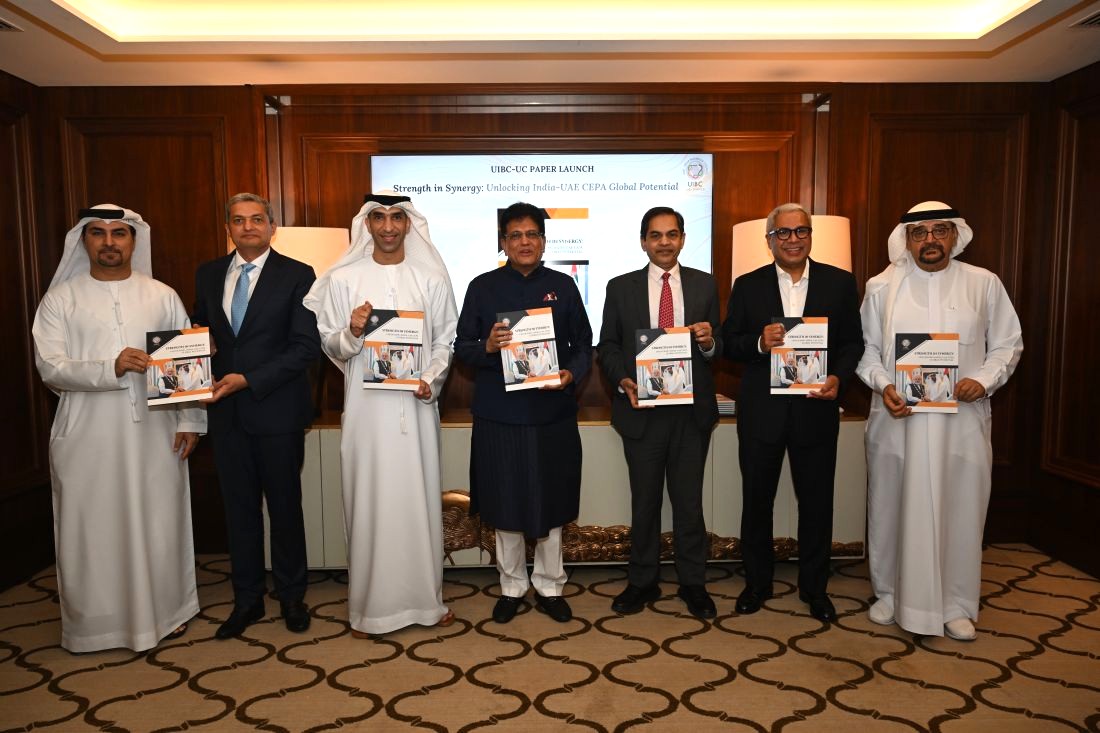
Building on this momentum, UIBC-UC used this opportunity to launch a major research initiative titled “Strength in Synergy: Unlocking India-UAE CEPA Global Potential.”
The research paper underscores the unprecedented transformation of CEPA from a bilateral trade accord into a cornerstone of strategic collaboration across sectors, geographies, and industries.
The meeting was attended by H.E. Piyush Goyal, Hon. Commerce and Industry Minister, Government of India, and H.E. Dr. Thani bin Ahmed Al Zeyoudi, UAE Minister of Foreign Trade, underscoring the strategic importance both governments place on deepening bilateral economic ties.
Representing the diplomatic corps, H.E. Sunjay Sudhir, Indian Ambassador to the UAE, and H.E. Satish Kumar Sivan, Consul General of India in Dubai, lauded the rapid strides made in strengthening India-UAE relations and specifically commended the pivotal role played by the UIBC-UC in this journey.
Key members of UIBC-UC were present, including Faizal Kottikollon, Chairman of KEF Holdings and Chairman of the UIBC-UAE Chapter; Rizwan Soomar, CEO & Managing Director – Middle East, North Africa & India Subcontinent, DP World, and Co-Chair of the UIBC-UAE Chapter; and H.E. Major General (Retd.) Sharafuddin Sharaf, Vice Chairman of Sharaf Group and member of the UIBC-UAE Chapter. Also in attendance were board members of UIBC-UC, including: Nilesh Ved, Chairman of Apparel Group; and Ankur Gupta, Head of Corporate Affairs & Growth, MENA at Tata Sons.
Strength in Synergy – UIBC-UC Releases Landmark Study on the Future of India-UAE CEPA. Breakthrough trade figures, sectoral expansion, and strategic cooperation in AI, sustainability, and space define the next chapter of bilateral collaboration
“CEPA is no longer just a trade pact, it’s a blueprint for the future,” said Faizal Kottikollon, Chairman of UIBC-UC, in the paper’s foreword. “This partnership exemplifies how political will, shared vision, and aligned strengths can co-create a model for cross-regional cooperation, innovation, and global leadership.”
The paper serves as a follow-up to UIBC-UC’s seminal 2023 publication, “The India-UAE Odyssey: Echoes of History, CEPA’s Melody, and Prospects for Future Harmony,” which mapped the historical, cultural, and economic foundations of the bilateral relationship. The UIBC-UC team integral to the research was also in attendance and included Kshitij Korde, Neha Sahni, Simar Kaur, Aiswarria Suchith, and Pratibha Prem Kumar.
The 2025 paper delves deeper into CEPA’s operationalization and post-signing impact, offering actionable insights and strategic foresight on how the agreement can scale to serve as a global model of resilient, innovation-led cooperation. With both nations playing pivotal roles in multilateral groupings such as BRICS, G20, and the India-Middle East-Europe Economic Corridor (IMEEC), the CEPA partnership is uniquely positioned to shape global policy, trade
governance, and sustainable development. “By combining India’s manufacturing and tech strengths with the UAE’s infrastructure, investment depth, and global reach, we are charting a new era of collaboration that is future-proof, inclusive, and globally resonant,” Kottikollon added.
The UIBC-UC report offers a comprehensive roadmap for policymakers, investors, and enterprises seeking to harness the full potential of CEPA. It strongly advocates for deepened cooperation in clean energy, education, research ecosystems, digital integration, and human capital development, reinforcing the shared ambition of both nations to lead in the evolving global order.