

NEW DELHI: Aadhaar, PAN, and ration cards may serve many uses, but they are not proof of Indian citizenship, the government has clarified. The only documents accepted as proof of citizenship are birth certificates and domicile certificates, according to a recent decision by the Centre.
This clarification comes after authorities discovered illegal foreign nationals using Aadhaar, PAN, and ration cards to pose as Indian citizens. These cards were often presented during verification drives, prompting a policy reset.
“The misuse of welfare-linked IDs has made it essential to reassert what constitutes actual proof of citizenship,” an official said. In contrast, documents like Aadhaar and PAN are issued for tax and welfare administration—not for verifying nationality.
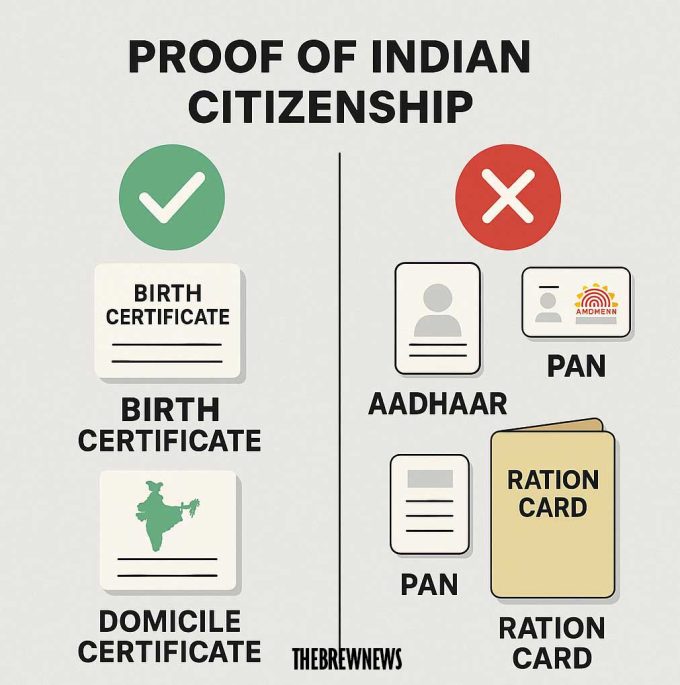
Citizens who may need to prove their Indian citizenship in the future are advised to obtain either a birth certificate issued by a recognized authority or a domicile certificate confirming long-term residence. These are the only valid legal affirmations.
The issue has grown more urgent as illegal immigration concerns rise. Welfare access, voting rights, and property ownership often hinge on citizenship status. The government’s move aims to close gaps in verification processes and maintain accurate records.
Meanwhile, officials have reiterated that the purpose of Aadhaar is limited. “Aadhaar only confirms identity and residence. It does not validate citizenship,” UIDAI has stated in the past.
PAN cards are primarily for income tax purposes, while ration cards are linked to the public distribution system. Neither confirms the individual’s nationality.
With increasing scrutiny in sensitive zones and border states, citizens are being urged to ensure they have valid documentation for any future legal or administrative needs.