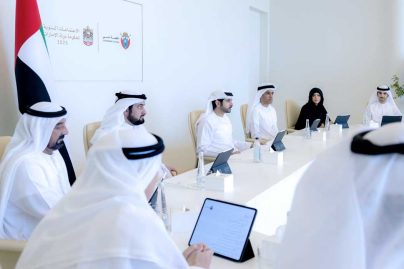

NCCD COP 16 is more than a critical milestone – it represents a moonshot moment to raise global ambition and accelerate action on land and drought resilience through a people-centered approach. The United Nations Convention to Combat Desertification (UNCCD) is the global voice for land and one of the three major UN treaties known as the Rio Conventions, alongside climate and biodiversity.
The Conference of the Parties (COP) is the main decision-making body of UNCCD’s 197 Parties – 196 countries and the European Union. COP16 will take place in Riyadh, Saudi Arabia from 2-13 December 2024 under the theme Our Land. Our Future.
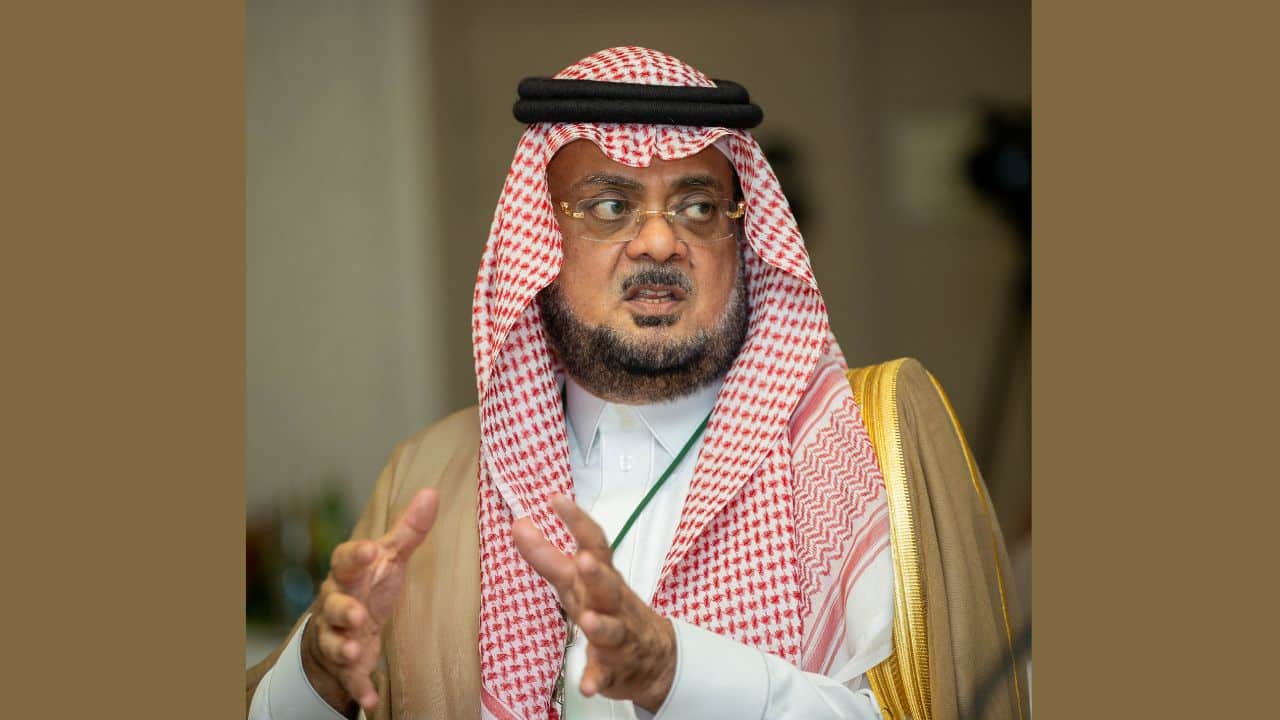
In an Interview with The Brew News, Dr. Osama Faqeeha, Deputy Minister of Environment, Water and Agriculture, Saudi Arabia, and Advisor to the UNCCD COP16 Presidency, emphasises the role of India, in upcoming COP16.
The Brew News: As Saudi Arabia prepares to host UNCCD COP16, can you share the primary goals for the Presidency? How does the Kingdom plan to mobilize global action on issues like land degradation and drought at the conference?
Dr. Osama Faqeeha: “We are focused on raising awareness of the impact of land degradation, drought, and desertification. The scale of our challenge is stark: globally, we lose land equivalent to four football fields every second, amounting to 100 million hectares annually.
That is why it is crucial for the 196 member countries to work together to make this Sixteenth Meeting of the UN Convention to Combat Desertification (COP16) in December a turning point to halt and reverse land degradation. We are working to mobilize the international community to accelerate global land restoration efforts, enhance drought resilience, and promote sustainable land management practices worldwide.
The degradation of our land is threatening food security, forcing people to be displaced from their countries and increasing international conflict. Addressing these challenges cannot be done in isolation and that is why we are gathering the international community in Riyadh to achieve lasting change.
We are engaging many stakeholders globally to build international momentum on these issues and ensure all countries contribute to making COP16 in Riyadh the platform to deliver multilateral action. But our work is not over at the conclusion of COP16, in fact, it is just beginning.”
TBN: Saudi Arabia’s Vision 2030 emphasizes a sustainable future through initiatives like the Saudi Green Initiative. How will COP16 align with this vision, and what specific commitments can we expect from the Kingdom?
Dr. Osama Faqeeha: “Vision 2030 demonstrates our fundamental belief that economic growth and environmental sustainability are mutually reinforcing, not mutually exclusive. Through COP16 in Riyadh, we will advance this vision by creating platforms for meaningful dialogue and action on land restoration and drought resilience.
We are already taking action. Earlier this year, Saudi Arabia joined the International Drought Resilience Alliance (IDRA), the global coalition mobilizing political, technical, and financial capital to prepare the world for harsher droughts.
At COP16 in Riyadh we will utilize and build on this framework to strengthen drought resilience globally and increase monitoring. Under Saudi Arabia’s UNCCD COP16 Presidency the first Drought Resilience Observatory is set to launch at COP16 in Riyadh to help turn science and data into urgent action.
This is a particularly pressing global issue given one-quarter of the world’s population is already affected by drought, and three out of four people are projected to face water scarcity by 2050.”
TBN: The Saudi Green Initiative aims to tackle local and global environmental challenges. What are some of the key achievements of this initiative so far, and how will COP16 help build on these successes?
Dr. Osama Faqeeha: “The Saudi Green Initiative exemplifies our commitment to practical environmental action, we have already planted over 95 million trees and rehabilitated more than 100 thousand hectares of degraded land. This figure is set to rapidly accelerate as we work towards restoring 40 million hectares through tree planting and other nature-based solutions. These efforts directly contribute to carbon sequestration, enhanced biodiversity, and increased climate resilience.
Through the Middle East Green Initiative, we are extending our impact across the region, restoring 200 million hectares of degraded land. We are now in the crucial implementation phase and in October held the First Ministerial Council in Jeddah alongside representatives from regional member countries and international organizations to accelerate action. These initiatives demonstrate how national and regional environmental programmes can catalyse broader action.
At COP16 in Riyadh we will build on such successes by encouraging the international community to bolster global commitments on land restoration and drought resilience. The UNCCD is targeting the restoration of 1.5 billion hectares of land by 2030, and we hope COP16 in Riyadh can help accelerate action to meet, and even surpass, this target.”
TBN: The Kingdom’s leadership role at COP16 is significant for the region. How will this role support climate action and environmental resilience in neighboring countries, especially those in similar arid climates?
Dr. Osama Faqeeha: “Crucially, COP16 in Riyadh comes at a time of growing environmental awareness, and action, in the Middle East and broader region. Beginning with COP27 in Egypt, followed by COP28 in the UAE and now COP16 in Riyadh, three Rio conventions will have taken place in the Arab world over the last three years. This is a clear signal that Saudi Arabia and its neighbours are accelerating their responses to global environmental challenges.
Whilst drought and sand and dust storms might be prominent in the MENA region, ultimately, the challenges we face are global issues that need international responses. Indeed, in many cases the impact of land degradation, desertification and drought is borderless. If we take just sand and dust storms, this effects the air we breathe, with two billion tons of sand and dust, equal to 350 Great Pyramids of Giza, entering the atmosphere every year. Experts attribute over 25% of this to human activity, which means as an international community, there are immediate steps we can take to reduce this.
As the UNCCD COP16 Presidency, Saudi Arabia will build on this growing regional momentum, environmental awareness, and action, to enhance international consensus on last restoration and drought resilience efforts.”
TBN: With climate crises affecting millions worldwide, what are the most urgent environmental challenges that you hope COP16 will address?
Dr. Osama Faqeeha: “The reality is this, land degradation, drought and desertification are leading causes of many of the issues impacting people around the world, be it food insecurity, water insecurity or forced migration. COP16 in Riyadh is an opportunity to turn the tide on these global crises, and we are doing all that we can to lay the groundwork for multilateral action in December.
Land degradation is a challenge so enormous it affects approximately one-third of humanity. What makes this particularly urgent is that about half of the global economy – approximately $44 trillion annually – depends on natural capital, from the food we eat to the minerals we rely upon in our daily lives.
The Intergovernmental Panel on Climate Change warns that degraded land releases billions of tons of CO2 each year, accelerating climate change. This creates a devastating feedback loop where land degradation worsens climate impacts, which in turn accelerates land degradation. In short, restoring land is one of the best things we can do to help manage and mitigate climate change. At COP16 in Riyadh we seek to address all these pressing global challenges, and more, by seeking multilateral action on land restoration and drought resilience.”
Read This Also: Exclusive: IIM Ahmedabad’s Dubai Campus to Open by 2nd half of 2025 for NRI Students!
TBN: Land degradation and desertification are affecting about 40% of the world’s land. What strategies or policies will COP16 propose to address this urgent issue?
Dr. Osama Faqeeha: “Currently, over 130 countries have participated in the Land Degradation Neutrality Target Setting Programme, with more than 100 having determined their national targets. While this represents progress, at COP16 in Riyadh we will push for more stringent, universally enforced criteria and enhanced global cooperation to achieve these goals.
We will also champion enhanced land tenure rights, and improved global monitoring for drought, and sand and dust storms.”
TBN: Achieving the UNCCD target of restoring 1.5 billion hectares by 2030 is ambitious. How does Saudi Arabia envision achieving tangible progress on this goal during its COP16 presidency?
Dr. Osama Faqeeha: “The target of restoring 1.5 billion hectares of degraded land by 2030 is indeed ambitious, but it is needed, and achievable with coordinated global action. During our UNCCD COP16 presidency, Saudi Arabia will seek to enhance multilateral frameworks to restore degraded land and build drought resilience. There are already some important mechanisms to do this, such as Land Degradation Neutrality targets.
We recognise that the effectiveness of current commitments varies greatly among nations, with only a fraction having robustly integrated targets into national policies. At COP16 in Riyadh, we will work to address this by promoting more standardised approaches to measurement and reporting, while still respecting the unique challenges each nation faces. This, however, is just one of the policy levers that will be discussed at COP16 in Riyadh that can deliver lasting impact.”
TBN: Forced migration due to drought and land degradation is an increasingly pressing issue. What global actions do you believe are essential to mitigate the socio-economic impacts of this crisis?
Dr. Osama Faqeeha: “Land degradation and forced migration are deeply interconnected challenges that require coordinated global action.
We recognise that addressing these challenges requires both immediate action and long-term planning. Through COP16 in Riyadh, we aim to strengthen implementation mechanisms and increase support for affected regions. We will also make the case that investing in land restoration is an investment that pays for itself. The UNCCD estimates that every dollar invested in degraded lands can yield up to $30 in returns, making this a crucial area for investment.
Our focus at COP16 in Riyadh will be on fostering partnerships across government, private sector, civil society, and academia to develop comprehensive solutions that address both the immediate humanitarian needs and the underlying environmental causes of forced migration.”
TBN: Water scarcity is a global issue but particularly critical for countries like India, where agriculture is vital to the economy. Could you share insights on COP16’s focus on sustainable water resource management in agriculture?
Dr. Osama Faqeeha: “Water scarcity is indeed a critical issue, particularly in countries like India where around 600 million citizens face high to extreme water stress according to the Indian government policy think tank Niti Aayog.
At the UNCCD COP16, sustainable water resource management in agriculture will be a key focus area – in recognition of the vital connection between water security and land degradation.”
TBN: In regions like Rajasthan and Andhra Pradesh, communities have pioneered methods to combat land degradation and drought. How do you view the importance of such localized approaches in driving global solutions?
Dr. Osama Faqeeha: “The success stories from regions like Rajasthan and Andhra Pradesh demonstrate the transformative power of local initiatives in combatting land degradation. For instance, in Rajasthan’s Lapodia village, the revival of traditional water harvesting systems has not only raised water tables but also regenerated degraded grasslands, inspiring over 50 neighbouring villages to adopt similar practices.
Similarly, the remarkable transformation achieved by Renuka Bio Farms in Andhra Pradesh’s Tirupati district shows how combining traditional wisdom with modern techniques can convert barren wetland into thriving agro-ecological systems.
These initiatives exemplify exactly what we hope to showcase and amplify at COP16 in Riyadh – practical, community-driven solutions that can be adapted and replicated globally.”
TBN: Saudi Arabia has experience with arid climate agriculture, which could offer valuable insights for water-scarce regions like India. What opportunities do you see for international collaboration to promote sustainable agricultural practices in these regions?
Dr. Osama Faqeeha: “The arid climate challenges we face in Saudi Arabia share many similarities with regions like Rajasthan, creating natural opportunities for collaboration and knowledge exchange. In Saudi Arabia we are focusing on utilizing renewable water resources, leveraging water conservation practices, and pursuing ambitious rural development programs.
Successful initiatives like the Ghandivan project in Jaipur, which has transformed barren wasteland into a thriving ecosystem through community-driven efforts, offer valuable insights that can be adapted across different regions.
At COP16 in Riyadh, we will create platforms for sharing such experiences and best practices to benefit countries, regions, and the planet.”
TBN: The “Road to Riyadh and the Youth” initiative highlights the importance of youth in environmental action. How does COP16 plan to elevate the voices and participation of young people in its agenda?
Dr. Osama Faqeeha: “Youth engagement is a central priority for COP16 in Riyadh. The next generation must be actively involved in shaping solutions to land degradation and drought resilience, as they will be most affected by these challenges.
The Green Zone at COP16 will create unprecedented opportunities for young people to engage directly with decision-makers, innovators, and environmental leaders. We are designing specific platforms and programmes to ensure youth voices are heard and their ideas are incorporated into action plans.”
TBN: With young leaders set to convene for a Youth Forum at COP16, what role do you believe youth can play in shaping the future of sustainable land use and drought resilience?
Dr. Osama Faqeeha: “The Youth Forum at COP16 in Riyadh represents our commitment to meaningful youth participation in environmental decision-making. Young people bring fresh perspectives, technological innovation, and energy to the challenge of land restoration and drought resilience. It is essential that they are part of discussions surrounding both the challenges, and the potential solutions. The UNCCD estimates 1 billion people under the age of 25 live in regions where jobs and livelihoods are dependent on land.
Through the forum and other youth-focussed initiatives at UNCCD COP16, we aim to create concrete opportunities for young leaders to shape policies and programmes. This is not just about listening to youth voices – it is about actively incorporating their ideas and solutions into our global response to land degradation.”
TBN: Looking to the future beyond COP16, how does Saudi Arabia plan to continue fostering international cooperation on environmental issues and achieving the ambitious targets set forth by the UNCCD and Vision 2030?
Dr. Osama Faqeeha: “Our commitment to international environmental cooperation extends well beyond COP16 in Riyadh. Through initiatives like the Green Zone and our thematic days, we are creating a legacy of lasting platforms for collaboration between governments, businesses, scientists, and civil society organisations.
We recognise that turning commitments into action requires stronger mechanisms for implementation, monitoring, and accountability. That is why we are working to establish more robust frameworks for international cooperation that will continue long after UNCCD COP16 concludes.”
TBN: In your view, what long-term impact can COP16 have on the global environmental movement? What do you hope will be the lasting legacy of Saudi Arabia’s leadership in this event?
Dr. Osama Faqeeha: “COP16 in Riyadh represents a crucial turning point in our global response to land degradation and drought. By bringing together stakeholders from across sectors and generations, we will catalyse a new era of environmental action characterised by concrete commitments, innovative solutions, and meaningful collaboration.
Ultimately, we hope UNCCD COP16’s legacy will be measured not just in commitments made, but in actions taken. Our goal is to establish lasting frameworks for cooperation and accountability that will accelerate global progress on land restoration and drought resilience long after the conference concludes.”