
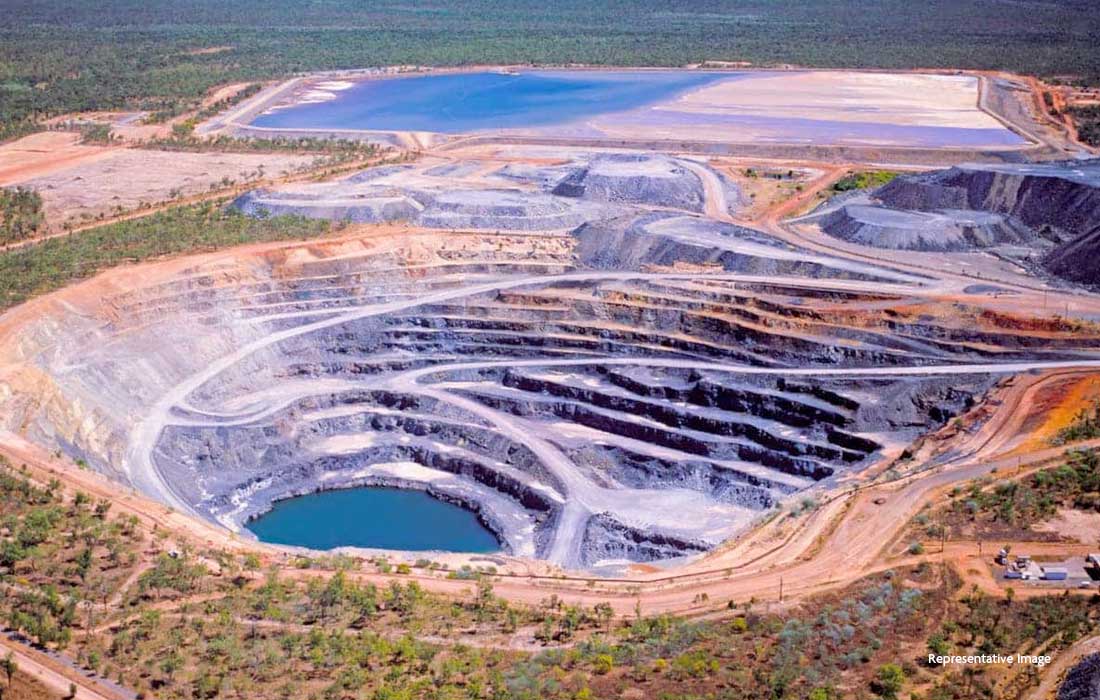

BEIJING: China has announced a major surge in mineral exploration success, with 38 new mineral deposits discovered in the first half of 2025, according to the Ministry of Natural Resources. This marks a 31% increase compared to the same period last year, with 25 of the finds classified as large or medium in scale.
Among the most noteworthy discoveries is China’s first super-large uranium deposit, located in Heilongjiang province in the northeast, a breakthrough that could significantly boost the country’s strategic energy resources. Other major finds include 3.37 million metric tonnes of rubidium in Xinglong county, Hebei province, positioning China as a global leader in rubidium ore, and 27,000 tonnes of cobalt in Longhua county, also in Hebei.
In Southwest China’s Guizhou province, Songtao county saw an expansion in manganese resources reaching 22.85 million tonnes, while Tekes county in Xinjiang added 81 tonnes of gold, bringing its cumulative gold reserves near the 100-tonne super-large scale benchmark.
The ministry noted that most of the targets under China’s 14th Five-Year Plan (2021–2025) have been achieved ahead of schedule. It also highlighted a sharp rise in mineral exploration investment. Non-oil and gas exploration reached 7 billion yuan ($975 million), up nearly 24% year-on-year. Private investment surged by 30%, accounting for nearly half of the total.
Interest in strategic minerals has grown notably, with significant exploration growth in tin, tungsten, copper, phosphate, bauxite, and others. The government has also granted 318 new exploration rights so far in 2025, following a record 581 permits issued in 2024.
The surge in discoveries and investments signals China’s intent to strengthen its resource independence and expand its leadership in minerals critical to clean energy, electronics, and advanced manufacturing.