
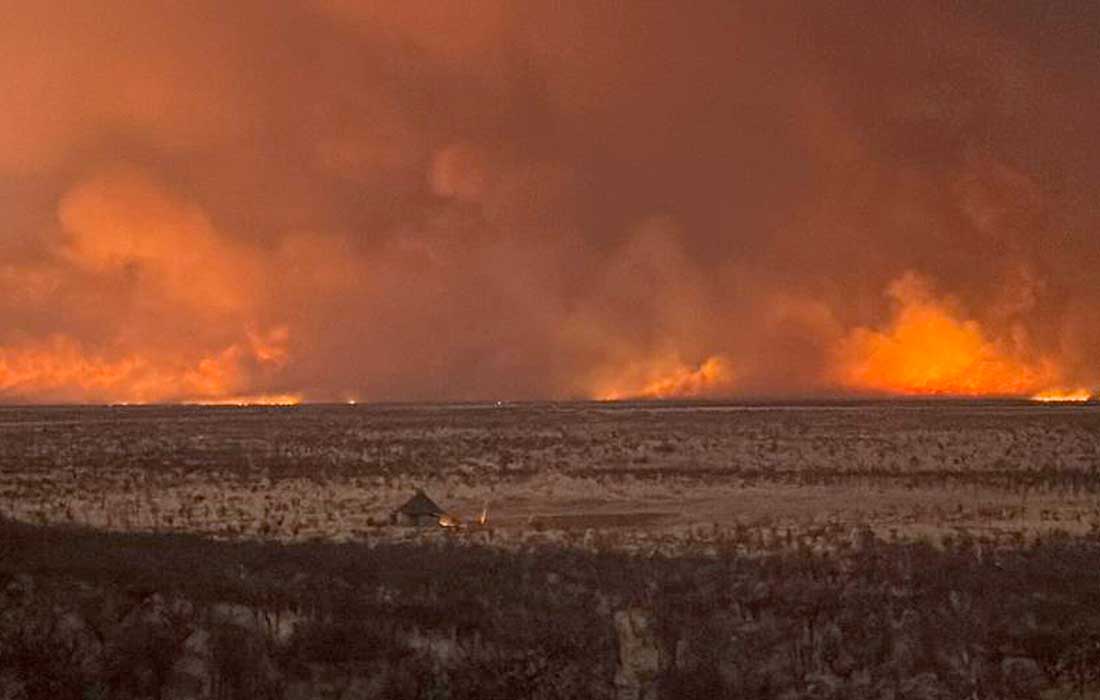

Namibia’s Etosha National Park lost over 850,000 hectares to wildfires, impacting biodiversity and threatening endangered wildlife species.
WINDHOEK: A wildfire that scorched more than a third of Namibia’s iconic Etosha National Park has now been contained, but concerns over ecological damage and wildlife loss remain. The inferno destroyed around 853,946 hectares — approximately 38 percent of the park’s total area — making it one of the worst fire incidents in the park’s recent history.
Namibia’s Minister of Environment, Forestry, and Tourism, Indileni Daniel, confirmed that fires within the park had been extinguished as of Wednesday. However, new active fires continue to burn in surrounding regions, notably in Otoongo, between the Okahao and Ruacana constituencies. Firefighting efforts are ongoing with support from the Namibian Defense Force, ministry personnel, and local volunteers.
Authorities believe the fire originated from charcoal production activities on a commercial farm bordering the southwestern part of the park. Strong winds and dry vegetation fuelled the blaze, which began on 22 September, rapidly escalating its impact across protected and community lands.
Etosha, one of Africa’s premier wildlife reserves, spans over 22,900 square kilometres and is home to more than 114 mammal species, including the critically endangered black rhino. So far, nine antelope deaths have been confirmed, though the full scale of wildlife casualties remains under assessment. Aerial imaging is being used to evaluate damage to ecosystems, especially grazing lands — an estimated 30 percent of which has been destroyed.
The government deployed helicopters and over 500 troops to assist in containment efforts. Prime Minister Tjitunga Elijah Ngurare acknowledged the scale of the emergency, while environmental experts called for stronger long-term strategies to manage future wildfire risks.
Although wildfires are natural phenomena in arid savannahs, experts caution that they must be closely managed. Officials say the incident underlines the need to review Namibia’s Fire Management Strategy for Protected Areas to prevent future ecological disasters.
The fires also posed a serious risk to surrounding communities, though no human casualties have been reported. With over 200,000 visitors annually, Etosha remains a crucial hub for both biodiversity conservation and eco-tourism.