
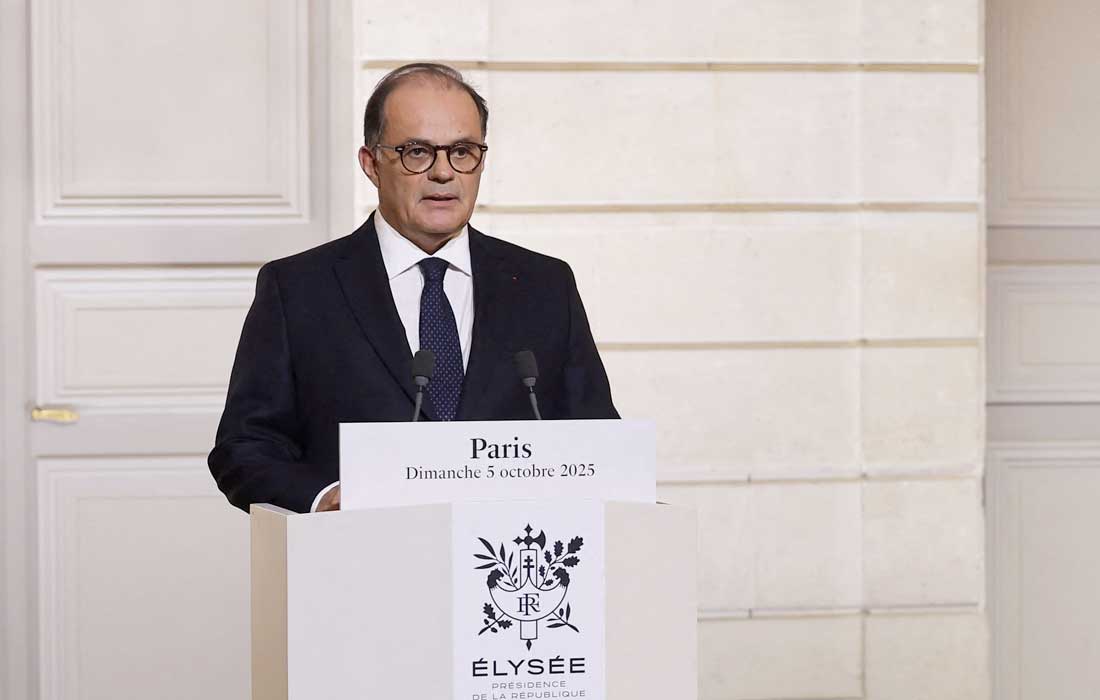

French Prime Minister Sébastien Lecornu unveiled a new cabinet, only for the Lecornu government collapse to follow within hours amid political opposition.
PARIS: In a dramatic political twist, French Prime Minister Sébastien Lecornu unveiled a fresh cabinet on Sunday, only for the Lecornu government collapse to unfold within hours. The shortest-serving government in France’s Fifth Republic history has sparked nationwide debate about the country’s growing political instability.
The cabinet reshuffle introduced Roland Lescure as the new Finance and Economy Minister, replacing Éric Lombard. Lescure, formerly the industry minister, is seen as a Macron loyalist and an experienced technocrat. Other high-profile ministers from President Emmanuel Macron’s centrist coalition remained in their positions. This included Education Minister Élisabeth Borne, Overseas Territories Minister Manuel Valls, Foreign Affairs Minister Jean-Noël Barrot, Justice Minister Gérald Darmanin, and Budget Minister Amélie de Montchalin.
Despite the continuity in several key ministries, Lecornu’s new lineup faced immediate resistance in Parliament. Major opposition parties, including the Socialist Party, declared that they would not support his administration. Just 14 hours after the cabinet was announced, Lecornu resigned, citing an inability to secure a working majority.
The Lecornu government collapse reflects growing fragmentation in the French legislature. Lecornu had pledged not to use the controversial Article 49.3, which allows a government to bypass a parliamentary vote to pass legislation. Instead, he aimed for consensus and open dialogue—a strategy that ultimately failed to rally support.
Analysts suggest this brief government episode may lead to snap elections, with Macron under pressure to restore political stability. France now awaits its next political move amid economic uncertainty and widespread public disillusionment with the current leadership.