
Researchers at Graz University of Technology have developed a sustainable fastening system that allows buildings to be renewed without demolition.
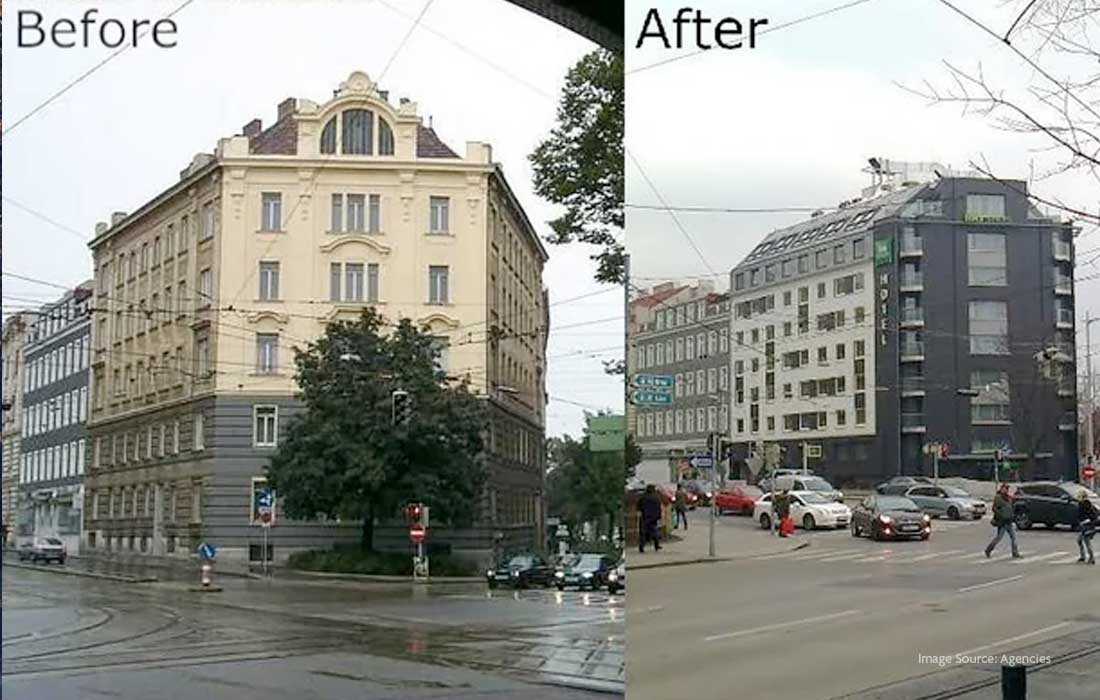
GRAZ: A team of researchers at Graz University of Technology in Austria has developed a breakthrough fastening system that could transform the future of construction. The innovation, created under the ReCon scientific project, enables buildings to be renewed and modernised without the need for full demolition, significantly reducing waste and costs.
The system works by introducing detachable connection points that make it possible to separate long-term structural elements from shorter-lived components such as surfaces, floors, and internal partitions. This means architects and developers can update or replace interior sections of a building while preserving its main framework for decades.
The ReCon project recently won the gold medal in a scientific research competition under the sustainability category, highlighting its role as a pioneering solution for environmentally responsible construction. By reducing demolition waste and improving resource efficiency, the project supports global efforts to move towards smarter, greener urban development.
Experts at Graz University note that the fastening system not only extends the lifecycle of buildings but also provides architects with greater flexibility to adapt spaces over time. This is particularly valuable in rapidly growing cities where frequent upgrades are needed to meet evolving demands without disrupting urban infrastructure.
By combining innovation with sustainability, the Austrian research team has demonstrated that construction can become both more adaptable and more environmentally friendly. The project is already being regarded as a major step toward a circular economy in architecture, where resources are reused efficiently instead of being wasted through demolition.