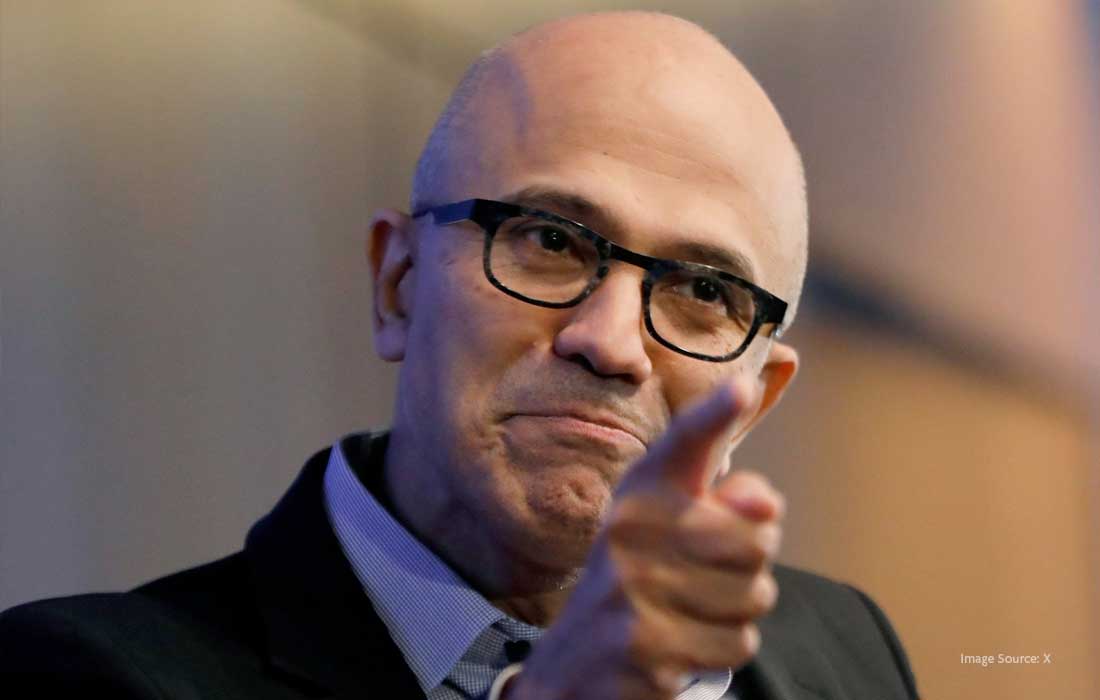

Microsoft CEO Satya Nadella says headcount will grow again post-layoffs, with AI enabling a more efficient and productive workforce.
NEW DELHI: Microsoft CEO Satya Nadella has shared a cautiously optimistic outlook on the company’s hiring plans following a turbulent year of tech industry layoffs. Speaking on a podcast hosted by Brad Gerstner, founder of Altimeter Capital, Nadella stated that Microsoft would expand its workforce again—but with a sharper focus on AI-driven productivity.
Earlier this year, Microsoft announced over 9,000 job cuts across multiple waves, citing restructuring and strategic realignment. Nadella acknowledged the disruption but suggested that AI would redefine how companies approach hiring. “The headcount we grow will come with a lot more leverage than the headcount we had pre-AI,” he said.
Nadella explained that a learning curve remains, but within a year or so, Microsoft’s workforce expansion will be shaped by “unlearning and learning” how to work alongside AI. This includes leveraging tools like Microsoft 365 Copilot and GitHub Copilot, powered by large language models developed by OpenAI and Anthropic.
The remarks arrive amid widespread AI-related layoffs across tech giants such as Amazon and Salesforce. Though many firms have refrained from pinpointing AI as the sole reason, analysts suggest AI is fundamentally changing hiring needs and job structures.
Nadella likened the shift to past workplace revolutions—like the adoption of fax, email, and spreadsheets. “Any planning, any execution, starts with AI. You research with AI, you think with AI,” he said, noting that productivity gains from AI integration are already visible at Microsoft.
He cited an internal example where a team used AI agents to manage data centre maintenance—an illustration of how smaller, tech-augmented teams can outperform traditional setups.
Despite recent headcount reductions, Microsoft saw 12 per cent year-over-year revenue growth and its strongest operating margins in decades. Nadella’s comments suggest the company is positioning itself not only to recover but also to lead the AI-driven workplace transformation.