
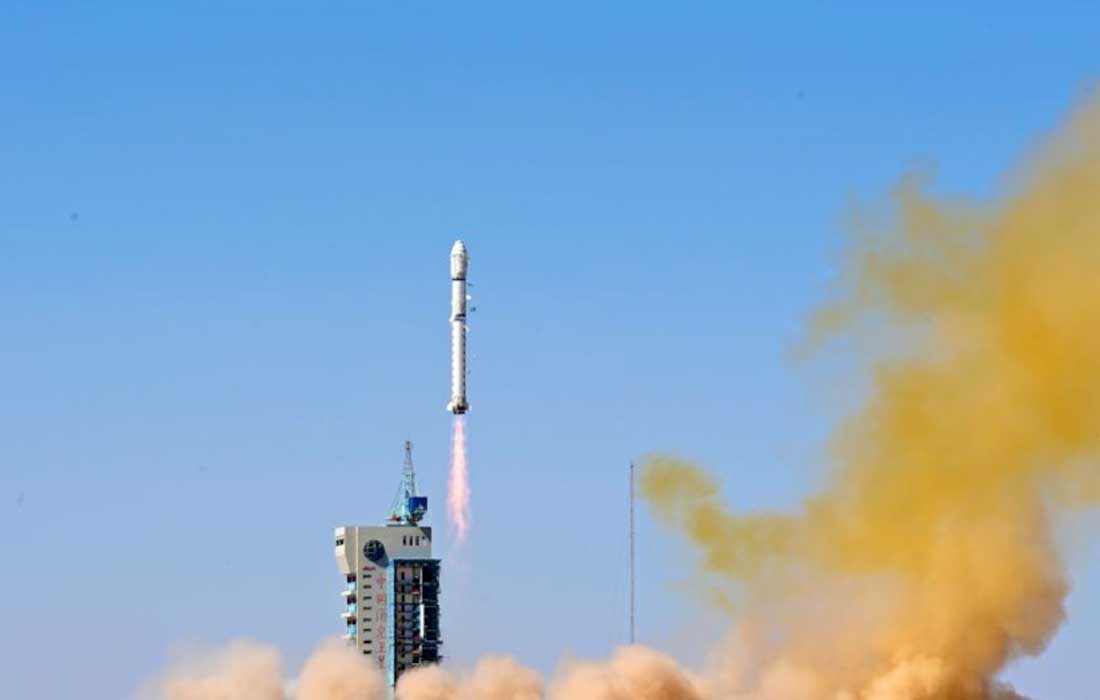

China launched its Shiyan-28B satellite aboard a Long March-4C rocket to explore space environments and test new technologies.
SICHUAN: China has successfully launched a new experimental satellite, Shiyan-28B 02, into orbit as part of ongoing efforts in space technology development. The satellite lifted off from the Xichang Satellite Launch Centre in the country’s southwestern Sichuan province at 16:55 Beijing time on Sunday, according to state broadcaster CCTV.
The Shiyan-28B satellite launch was completed aboard a Long March-4C rocket, which placed the satellite into its designated orbit without issues. This marks the 589th flight of the Long March carrier rocket family, highlighting China’s consistent and ambitious space exploration trajectory.
Authorities confirmed that the satellite will primarily be used for testing space environment conditions and developing associated technologies. Such missions play a vital role in strengthening China’s capabilities in satellite resilience, long-term performance in orbit, and future aerospace innovation.
The Shiyan-28B satellite launch reflects China’s continuous progress in its space programme, which now includes lunar exploration, satellite constellations, and experimental deep-space missions. By conducting in-orbit technology trials, China aims to validate new space systems and prepare for more complex missions ahead.
As China expands its presence in low-earth and deep-space environments, launches like this one underscore the country’s pursuit of becoming a global leader in aerospace development. The mission also supports long-term goals tied to space-based monitoring, research, and communication technologies.