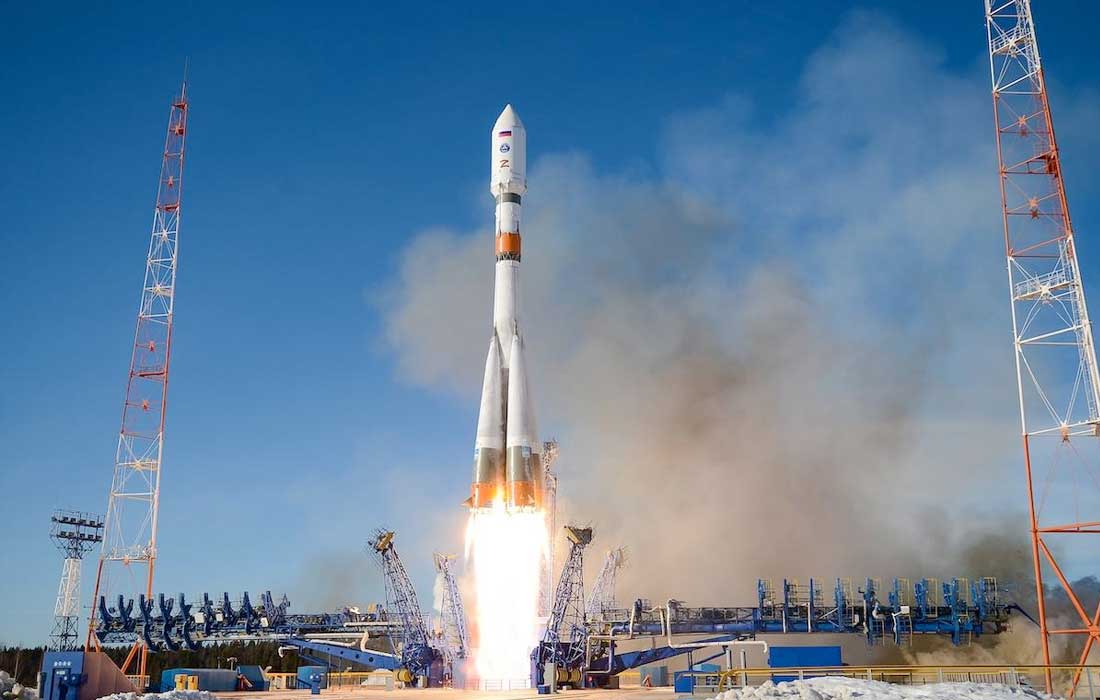

ST. PETERSBURG: A team of Russian engineering students from the D.F. Ustinov Baltic State Technical University Voenmeh, in collaboration with a local St. Petersburg startup, has developed a pioneering ultralight launch vehicle called SpaceNet. The rocket is tailored for deploying small satellites into low Earth orbit and showcases the future of cost-effective space access.
Weighing approximately 14 tonnes, the SpaceNet vehicle utilises cutting-edge aerospace technology and artificial intelligence. The project team employed AI-driven computer simulations to optimise the rocket’s structural design and performance efficiency. The use of composite cryogenic tanks has reduced the overall structural weight by 15–20% compared to conventional counterparts.
One of the notable innovations includes the bimetallic 3D printing of engine components, combining bronze and steel. This technique enhances combustion chamber temperature while improving fuel efficiency. “Engine parts are manufactured using bimetallic 3D printing technology. This alloy increases temperature and reduces fuel consumption,” explained Igor Volobuev, a project lead.
Chief designer Pavel Arkhipov added that upcoming developments will focus on heat-resistant alloys for 3D printing, heavy-duty fibre-based materials, eco-friendly propulsion technologies, and boosting the use of domestic microelectronics in space systems.
The SpaceNet vehicle is designed to deliver payloads to orbits at 500 km, 800 km, and 1,500 km altitudes. Additionally, the team is working on technologies for satellite maintenance and servicing in orbit, further broadening the scope of their innovation in the growing small satellite sector.