
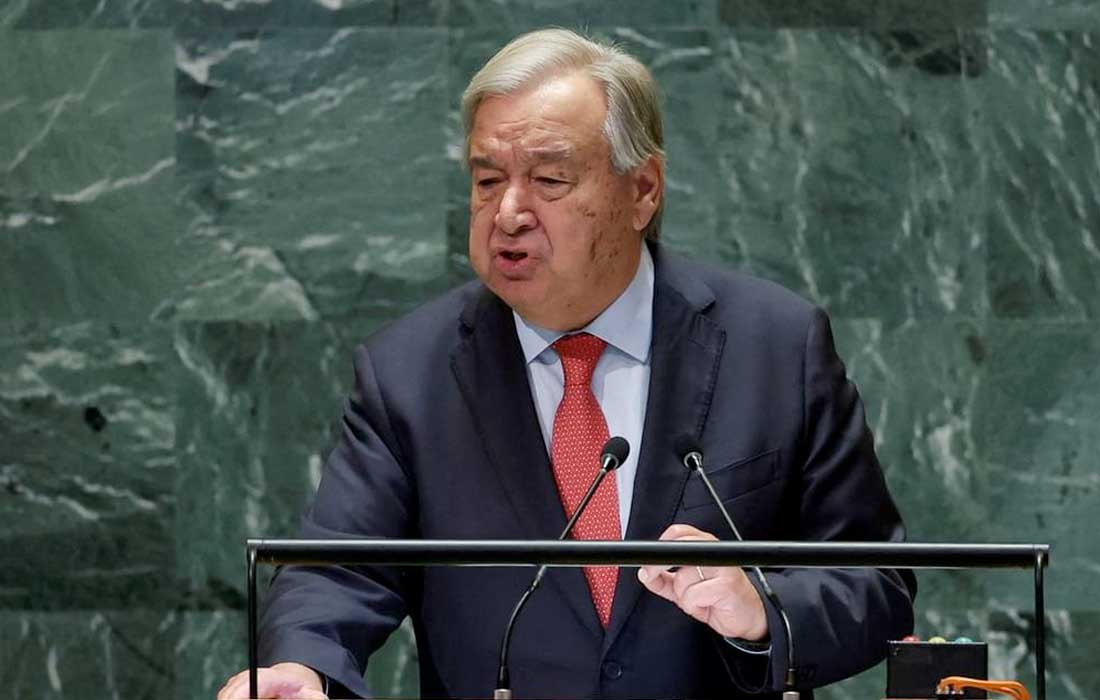

UN Secretary-General António Guterres urged world leaders to regulate artificial intelligence, warning it poses major risks to global peace and security if left ungoverned.
NEW YORK: United Nations Secretary-General António Guterres has issued a stark warning to world leaders, stating that artificial intelligence must never be allowed to decide the fate of humanity without strict international safeguards. Speaking at a high-level UN Security Council debate, Guterres highlighted both the promise and peril that AI technology brings to global peace and security.
Guterres noted that AI is no longer theoretical. “AI is no longer a distant horizon – it is here,” he said. “The question is not whether AI will influence international peace and security, but how we will shape that influence.” He stressed that the rapid advancement of AI is already transforming economies, societies and the global information space.
The UN chief outlined potential benefits of artificial intelligence when used responsibly. He noted AI’s ability to anticipate food insecurity, assist in humanitarian de-mining operations, and identify signs of violence before it escalates. However, Guterres also issued a serious warning: without regulation, AI can be weaponised, leading to destructive consequences.
He cited examples of AI already being used in armed conflicts, cyberattacks on vital infrastructure, and the creation of deepfakes that threaten diplomatic dialogue and global trust. He warned that these threats could easily spiral into unmanageable crises if global frameworks are not urgently established.
To address these concerns, Guterres proposed four urgent priorities: ensuring human oversight over the use of force, developing universal regulatory standards, protecting the integrity of information, and bridging the “AI capacity gap” between developed and developing nations.
He also highlighted that efforts are already in motion. A scientific advisory panel on AI has been created, and a global dialogue on AI governance is set to take place in New York. These initiatives aim to ensure every country has a voice and that AI development remains inclusive and well-governed.
Guterres concluded with a call for unity: “Together, these initiatives aim to connect science, policy and practice; provide every country a seat at the table; and reduce fragmentation.” His message was clear—humanity must remain in control of artificial intelligence to ensure a safe, secure and equitable future.