
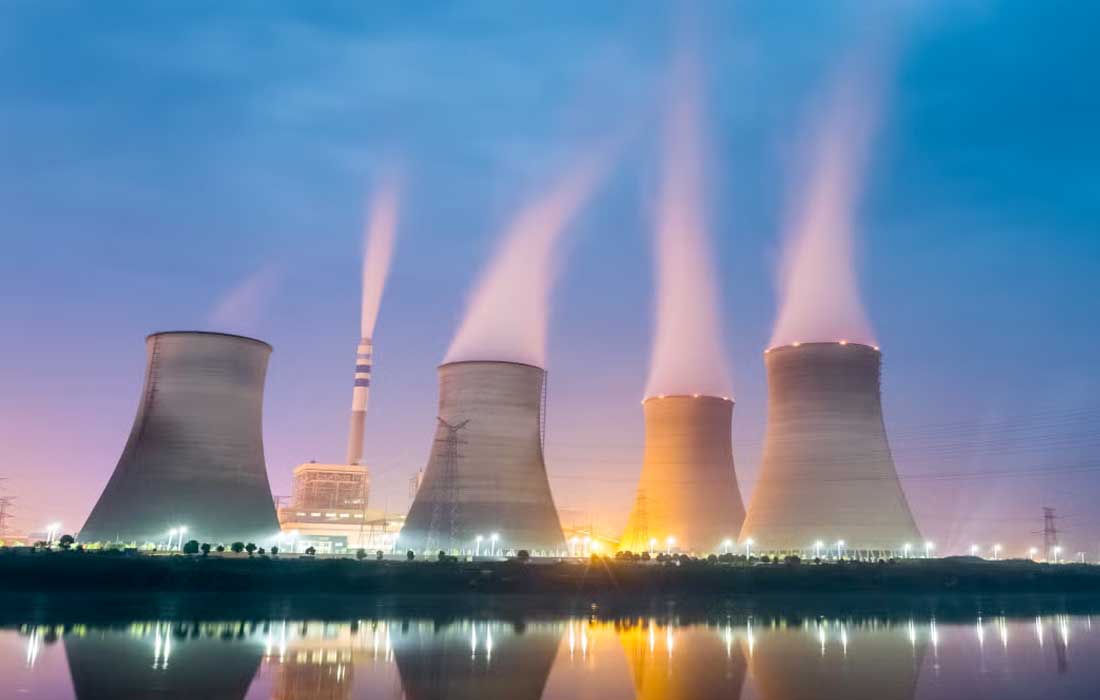

Nuclear reactors worldwide generated a record 2667 TWh in 2024, driven largely by Asia, according to the World Nuclear Association.
LONDON: Nuclear power has just broken a long-standing record. According to the World Nuclear Association’s (WNA) World Nuclear Performance Report 2025, reactors across the globe generated 2667 terawatt-hours (TWh) of electricity in 2024, surpassing the previous record of 2660 TWh set back in 2006.
The report highlights an average capacity factor of 83%, meaning reactors operated close to full potential for most of the year. Notably, over 60% of reactors achieved a capacity factor above 80%, underscoring the sector’s reliability even as many plants age.
Asia has been the powerhouse behind nuclear growth, accounting for 56 of the 68 reactors commissioned over the past decade and home to 59 of the 70 reactors currently under construction. New connections in 2024 included China’s Zhangzhou 1 and Fangchenggang 4, India’s Kakrapar 4, the USA’s Vogtle 4, France’s Flamanville 3, and the UAE’s Barakah 4.
Despite some closures — including Russia’s Kursk 2, Canada’s Pickering 1 and 4, and Taiwan’s Maanshan 2 — the overall momentum remains strong. WNA Director General Sama Bilbao y León called the achievement a “testament to the industry,” emphasising that global goals require this record to be broken “again and again, by increasingly larger amounts.”
The report projects further growth as the reactors under construction are grid-connected over the next five to six years. Industry experts believe that with strong government support, bold investments, and public backing, nuclear energy could play a pivotal role in meeting climate targets by providing reliable, low-carbon electricity at scale.