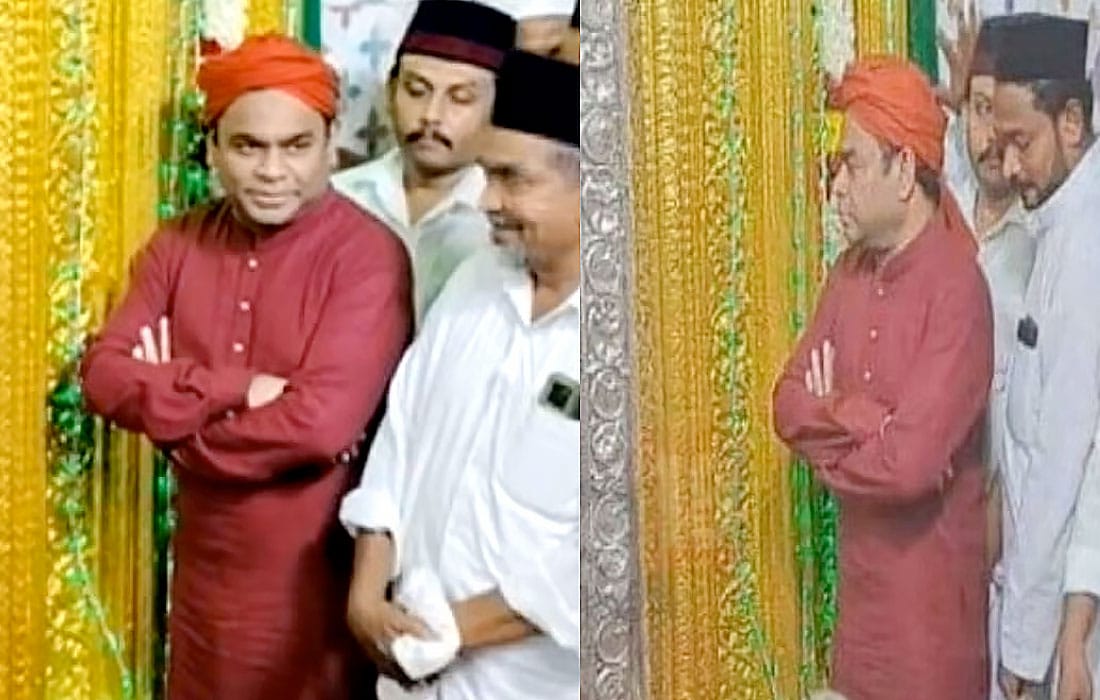

Renowned music maestro AR Rahman recently made a humble visit to the Nagore Dargah in Nagapattinam to partake in the Kanduri festival. Arriving in an auto-rickshaw, the Oscar-winning musician was captured on camera wearing a maroon kurta.
The Kandhuri Festival, also recognized as the Nagore Dargah Festival, spans 14 days, commemorating the first to the fourteenth day of Saint Shahul Hamid’s death anniversary. Saint Hazrath Syed Shahul Hamid, a 13th-generation descendant of Saint Sufi, gained acclaim for healing the physical ailment of Thanjavur’s 16th-century Hindu king Achuthappa Nayak. The festival attracts Hindu devotees due to its historical significance.
In a past interview, Rahman shared his affinity for Sufism, dating back to the 1980s when he began his journey as an independent music composer. Recently, he expressed that embracing Sufism brought a sense of peace, and things started falling into place for him professionally and personally. He described the experience as more tranquil, and doors seemed to open for him and his family after adopting this faith.
When questioned about any social challenges his family may have encountered due to their change in faith, Rahman praised the open-mindedness of Indians, particularly in the south. He emphasized the accepting nature of people, stating that Indians, especially in the southern regions, are welcoming and happy, embracing the idea of coexistence. While acknowledging that India has generally been accepting, he also acknowledged the strange political climate in recent years. Despite this, Rahman’s positive outlook on India’s inherent inclusivity remains evident.
When asked if there was any social changes that the family had to face because of their change in faith, Rahman said that Indians are very accepting people and they did not face any kind of discrimination. “Indians are very open people, especially in south, they are very open, very embracing and they are happy people. They want everybody to live and let live and that’s what happened,” he said. Rahman noted that the situation in India has largely been the same but acknowledged that the “past few years have been strange because of political stuff.”
(This article is published under a mutual content partnership arrangement between The Brew News and The Free Press Journal)
AR Rahman auto-rickshaw AR Rahman auto-rickshaw