
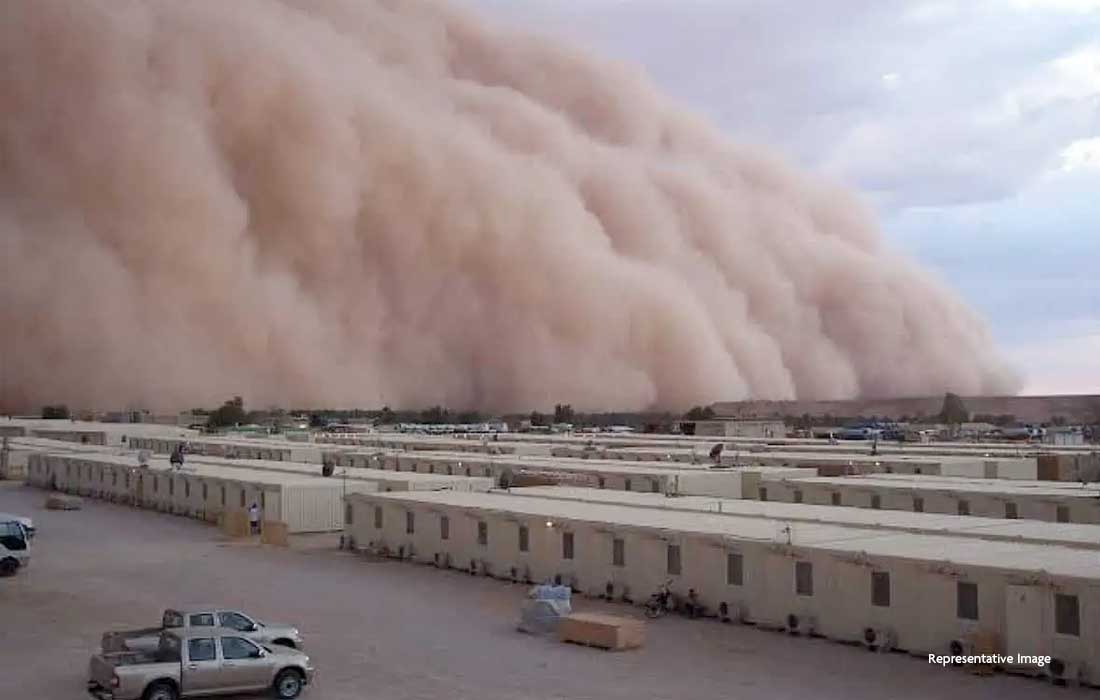

GENEVA: Sand and dust storms now impact more than 330 million people across over 150 countries, posing serious threats to public health, infrastructure, and the global economy, according to the latest Airborne Dust Bulletin released by the World Meteorological Organisation (WMO).
The 2024 edition of the annual report highlights that although the global average of dust concentration decreased slightly compared to 2023, certain regions—particularly those downwind from major deserts—experienced levels above the long-term 1981–2010 average. Each year, around 2 billion tonnes of sand and dust are blown into the atmosphere, often travelling thousands of kilometres across continents and oceans.
The Bulletin notes that while much of this activity is natural, worsening land degradation, drought, and poor land and water management are significantly accelerating storm intensity and frequency. Key source regions include the North African and Middle Eastern deserts, which contribute over 80% of global dust emissions.
Among the most affected regions are the Caribbean Sea, South America, the Mediterranean, Arabian Sea, Bay of Bengal, and central-eastern China. In 2024, African dust was once again observed drifting across the Atlantic into the Caribbean, raising alarm among health and environmental agencies.
WMO Secretary-General Celeste Saulo stated, “Sand and dust storms do not just mean dirty windows and hazy skies. They harm the health and quality of life of millions and cost millions of dollars in lost productivity and infrastructure damage.” She also stressed the urgent need for investment in early warning systems and dust mitigation strategies, as part of the Early Warnings for All initiative.
A new sand and dust storm indicator developed by the WMO and World Health Organisation revealed that 3.8 billion people were exposed to unsafe dust levels between 2018–2022—a 31% rise from the 2003–2007 period. In some heavily affected regions, people endured dust exposure on more than 87% of days in a five-year span.
The Bulletin also emphasised that the economic toll of sandstorms is underestimated. A case study from the United States placed the 2017 cost of dust and wind erosion at US$154 billion, more than four times higher than the 1995 estimate. This included damage to agriculture, energy, transportation, and health, with researchers saying the true cost is likely even greater due to limited data.