
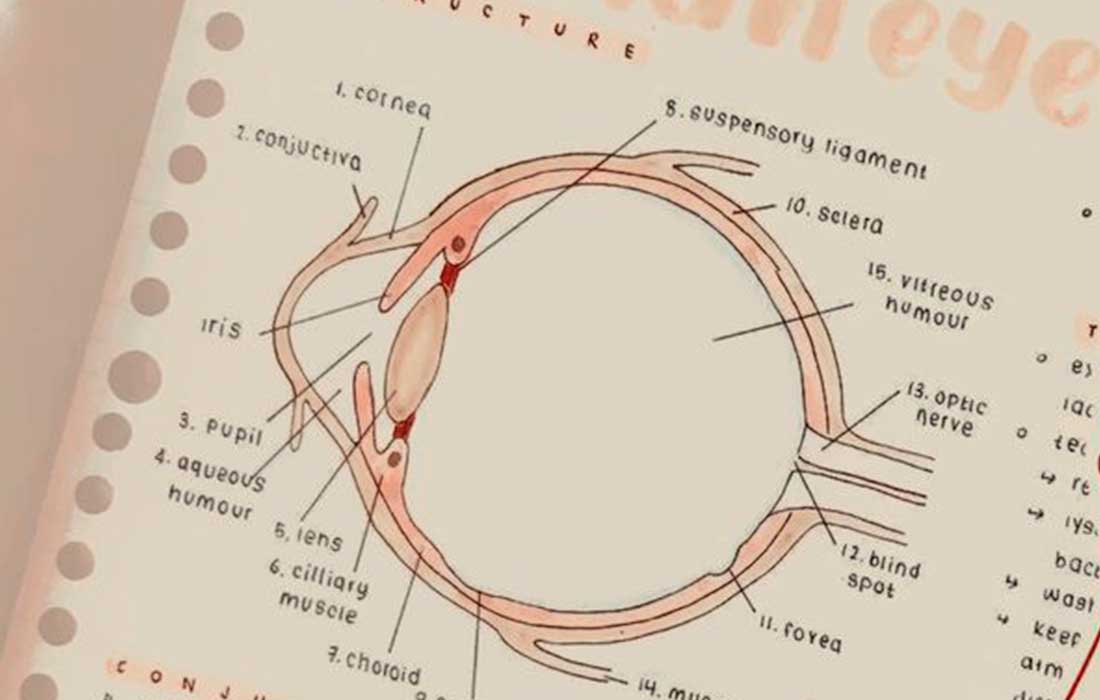

Mastering biology diagrams becomes easier with clear drawing, neat labelling, regular practice and a positive learning approach. Minoo Jokhi teaches fun facts of memorizing biology diagrams with ease.
Biology diagrams are often considered tricky by students, but with the right techniques, they can become one of the most enjoyable parts of learning. In part two of this guide, here are five more practical tips to help you remember biology diagrams easily and present them with clarity in exams. Mastering biology diagrams in this way can improve memory, accuracy and confidence.
- The biology diagram must be clearly visible; it helps to learn and understand better. Avoid crowding parts of the diagram as you will lose marks. Also, the diagram should be large enough to present all the intricate details. Indeed, as the late renowned English text designer William Morris rightly said: “The true secret of happiness lies in taking a genuine interest in all the details of daily life.”
- Make a list of all the parts that have to be labelled. It is good to keep the diagram on the left-hand side of the page and use the right-hand side for labelling purposes.
- Avoid improvisation. You can’t use your creative brain to draw biological diagrams on your answer sheet. Improvisation isn’t acceptable in biological drawings, so try to keep it at bay at all possible costs, especially when you are involved in drawing the diagram of a human brain, a human heart, or the digestive system. You should draw what you see, not what you want to see. Also, keep in mind that there is no room for creativity in biological drawings.
- Avoid tracing the image. While studying, don’t trace the image from your book; you will not be able to learn much and won’t be able to score marks.
- Have a positive attitude towards biology diagrams. Biology diagrams can be complicated at times, but they are also very interesting and fun to learn. For those who enjoy them, it is an enriching experience.
Talking more about labelling: labelling should be done in a column on the right-hand side of your page. Try to maintain alignment to the best of your abilities. Also, use a scale for drawing the lines used for labelling purposes, and it is more advisable to keep those lines parallel to one another. The lettering used for labelling should be kept in horizontal alignment. Try to avoid vertical lettering unless you are specifically instructed or constrained to do so. It is very important to keep your lettering neat and intelligible so that the teacher can understand it quickly. For easier comprehensibility, it is more advisable to use block letters for labelling purposes.
Do keep in mind: diagrams are very vital and essential tools for biologists as they put forward, evaluate, and revise their accounts of phenomena and mechanisms. There are three types of diagrams: expressions, concept definitions, and expression relations. And most importantly, treat biology diagrams as fun. Stay stress-free; sleep tension-free. Face the problems and difficulties which you might encounter by accepting them rather than running away. It is rightly said: “Difficulties are plenty, but only the winners overtake them.” Do not procrastinate or delay learning the diagram as it causes lapses in memory. As we all know, what we think we can do tomorrow should be done today. And lastly, keep revising the diagram; it will be immensely beneficial in the long run.

About the writer:
Minoo Jokhi is a fun-loving mathemagician and memory trainer based in Mumbai, India. He teaches people from age 4 to 80 how to boost their memory and proves that memory isn’t something you’re just born with — it’s something you can actually train.
If you’d like to get in touch, you can email him at minoojokhi@rediffmail.com or check out his work at minoojokhi.in
Disclaimer: All views and opinions expressed in The Brew Opinion – our opinion section – are those of the authors and do not necessarily reflect the official policy or position of TheBrewNews.com, the company, or any of its members.