MANAMA: Bahraini and British archaeologists have made an exciting discovery: they’ve found what might be one of the oldest Christian buildings in the Arabian Gulf. The Bahraini News Agency reported this incredible find on Saturday.
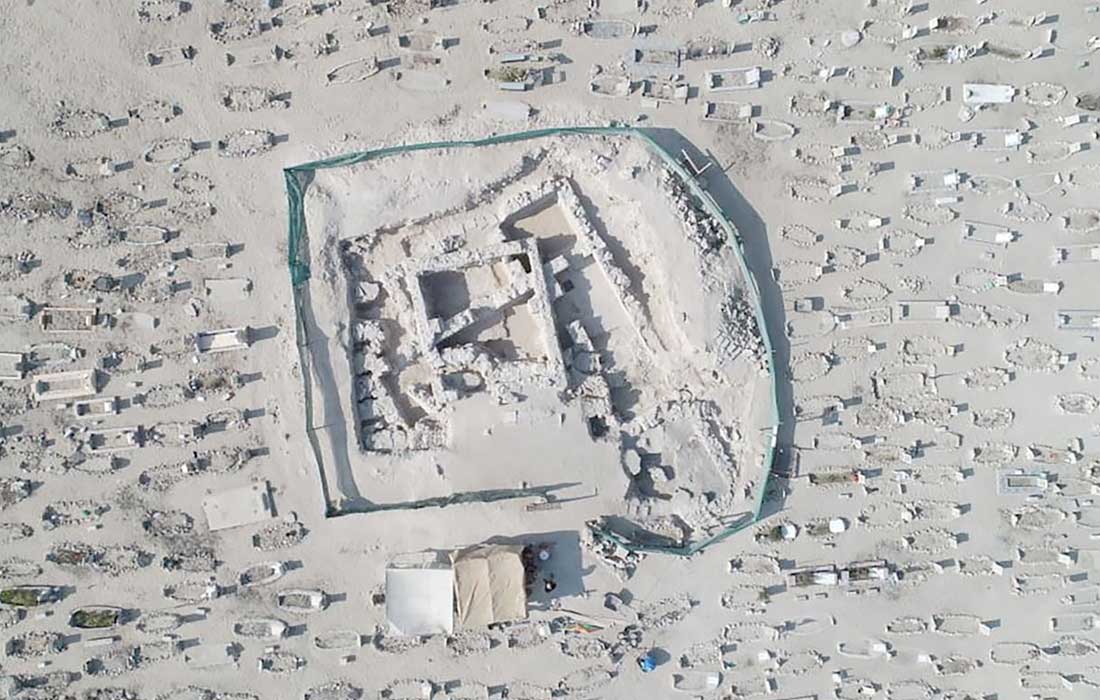
The ancient building was found in Samahij, a town in Muharraq, Bahrain. This discovery gives us the first solid evidence of an ancient Christian community in the area. While the Gulf region is mainly known for Islam today, Christianity, specifically the Church of the East or the Nestorian Church, was present there until the 7th century CE.
The building dates back to the mid-4th to mid-8th centuries CE, according to radiocarbon dating. It was probably abandoned as Islam became more widespread in the 7th century.
This excavation project started in 2019 and is a team effort between the Bahrain Authority for Culture and Antiquities and a British team led by Professor Timothy Insoll from Exeter University and Dr. Salman Al Mahari from Bahrain. Their hard work paid off with these significant findings in 2023.
The building might have been the bishop’s residence, part of a diocese that included Samahij. Historical records call this area “Mishmahig” or “Mashmahig,” which seem to be old names for Samahij.
Some bishops from this area were involved with the central church authorities, including one who was dismissed in 410 CE and another who was condemned in the mid-7th century.
What makes this discovery special is its location in the middle of a modern, busy town, unlike other ancient Christian sites found in remote areas along the Gulf coast. Among the interesting finds were three plaster crosses, carvings of a fish symbol, and part of the “Chi Rho” symbol, which stands for Christ.
Dr. Salman Al Mahari explained that the excavation is nearly complete and highlighted the site’s importance for Bahraini history. This site offers valuable insights into the early Christian presence in the region.
Also read: Dubai Police rescue driver whose Cruise Control malfunctioned
Initial studies suggested the site dated from the 6th to 8th centuries CE, but new radiocarbon dating shows it dates back to the 4th century, making it one of the oldest Christian buildings in the Gulf. They also found a clear Eastern cross on a plaster slab.
The building, made of stone and plaster, included door and seat placements, a kitchen with ovens and storage, and artifacts showing that the residents had a good standard of living. They ate meat, fish, shellfish, and various crops. They also traded with India, as shown by semi-precious agate beads and Indian pottery. Small drinking glasses and 12 copper coins from the Sasanian Empire were found, along with spindle whorls and copper needles, suggesting they made cloth, possibly for religious purposes.
Professor Tim Insoll emphasized the importance of preserving the site, noting its historical and archaeological value. He shared a charming find: someone had drawn part of a face on a pearl shell using bitumen, perhaps for a child who lived there. This is the first physical evidence of the Nestorian Church in Bahrain, giving us a fascinating glimpse into how people lived, worked, and worshiped back then.