
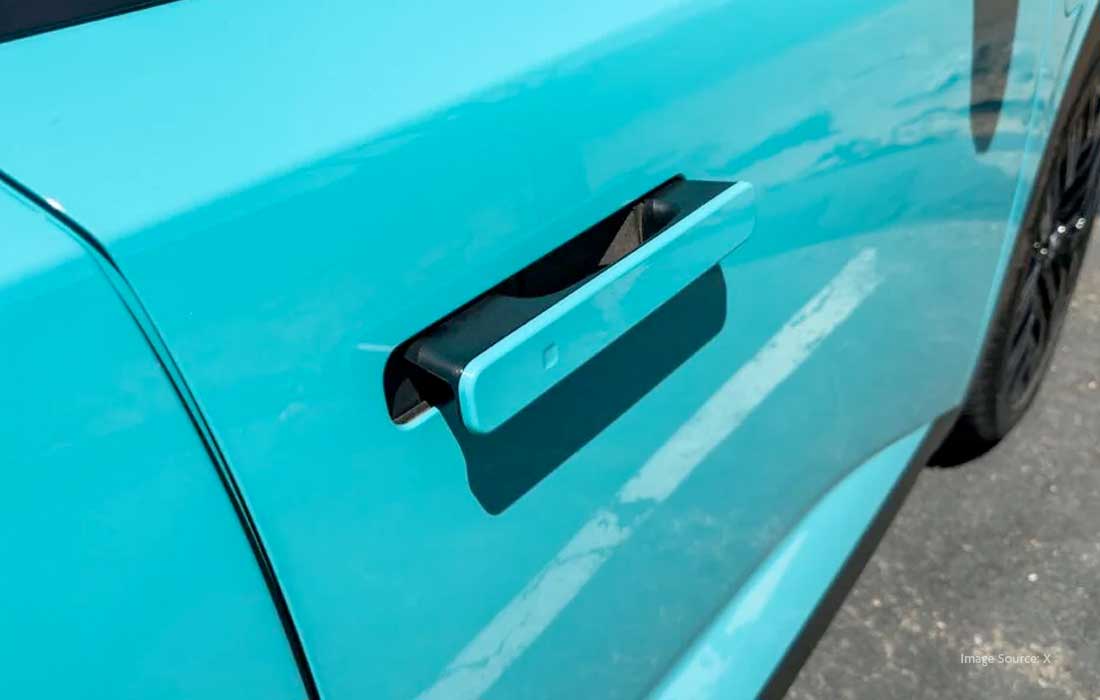

China plans to ban fully retractable EV door handles from July 2027, citing safety risks, accidents, and poor reliability.
BEIJING: China is set to deliver a major regulatory blow to the global electric vehicle industry, as new safety standards expected in July 2027 will prohibit fully retractable door handles on new cars. The move comes amid growing evidence that these futuristic designs, widely adopted by EV brands, pose serious safety risks and far outweigh their minimal aerodynamic benefits.
According to data from the China Insurance Automotive Safety Index, retractable handles failed in nearly one-third of side-impact crash tests, opening just 67% of the time compared to 98% for conventional mechanical handles. Safety experts warn that this gap could be the difference between life and death during emergencies.
Real-world incidents have reinforced these concerns. In Changchun, passengers were trapped inside EVs when cold weather froze the handle motors, while heavy rainfall in Guangdong caused electrical failures that forced occupants to smash windows to escape. The National Accident Investigation System reported a 47% increase in handle-related accidents in 2024, with concealed designs accounting for more than 80% of the cases.
Despite their sleek aesthetic, retractable handles add little to vehicle performance. Independent research shows they improve drag coefficient by only 0.005 to 0.01 Cd—translating to about one extra mile of range. Meanwhile, the motors and mechanisms add as much as 18 pounds to the car’s weight, often cancelling out any efficiency gains.
Cost and reliability are also key issues. These electronic handles fail eight times more often than traditional ones and are three times more expensive to repair. One leading EV manufacturer reported that handle malfunctions made up 12% of all repair cases last year.
The upcoming ban will still allow semi-retractable and traditional handles but requires all vehicles to include mechanical backup systems that work even if the power supply fails. With China representing the world’s largest EV market and a crucial source of revenue for global automakers such as Tesla, the regulation could force a sweeping redesign of EV models in the years ahead.